English
- All
- Product Name
- Product Keyword
- Product Model
- Product Summary
- Product Description
- Multi Field Search
Views: 0 Author: Site Editor Publish Time: 2026-03-03 Origin: Site
The new energy industry is at the forefront of technological innovation, involving sectors such as solar energy, electric vehicle batteries, wind power, and microelectronics. These industries require extremely precise manufacturing processes, where even the smallest contamination can have detrimental effects on product quality and performance. Cleanrooms, or controlled environments, play a crucial role in ensuring the production process remains free from airborne particles, chemicals, and microorganisms that could compromise product integrity.
As these industries continue to evolve and scale up, the importance of maintaining cleanroom integrity has become increasingly critical. Ensuring that these environments meet stringent cleanliness standards is vital for the manufacturing of sensitive products like photovoltaic cells, semiconductors, and energy-efficient batteries. This is where advanced filtration systems, such as pleated filters, come into play.
Air filtration is one of the primary mechanisms used to maintain cleanroom standards. Filters remove airborne particles, bacteria, and other contaminants from the air, ensuring the air quality remains within the required standards for each industry. In a cleanroom, the smallest dust particle or contaminant can lead to defects in products, equipment failure, or even delays in the production cycle. As such, air filtration systems must be highly effective, reliable, and efficient. Pleated filters are increasingly popular in new energy cleanrooms due to their superior performance and ability to meet these rigorous demands.
Pleated filters are a type of air filter characterized by their pleated (accordion-like) structure, which increases the surface area available for capturing contaminants. The pleats allow the filter to hold more dirt without restricting airflow, making them highly effective for environments where consistent airflow and contaminant removal are crucial.
Typically constructed from materials like fiberglass, synthetic fibers, or polyester, pleated filters are designed to trap particles as small as 0.3 microns, which is essential in industries requiring ultra-clean environments. These filters are available in various efficiency levels, including HEPA (High-Efficiency Particulate Air) and ULPA (Ultra-Low Particulate Air), depending on the specific filtration needs.
The pleated design increases the filter's surface area without increasing its size, which makes them compact but highly efficient. As air flows through the filter, particles such as dust, dirt, bacteria, and even viruses are captured by the fibers. The increased surface area allows pleated filters to trap more contaminants without impeding airflow, a critical factor in maintaining cleanroom pressure and efficiency.
Furthermore, the pleated structure provides a larger space for dust and particulate matter to accumulate, which reduces the frequency of filter changes and ensures the filter can function for longer periods. The pleats also allow for better distribution of airflow, ensuring uniform performance across the filter.
HEPA Filters: High-efficiency filters that capture 99.97% of airborne particles as small as 0.3 microns. HEPA filters are commonly used in cleanrooms for industries such as pharmaceuticals, semiconductor manufacturing, and aerospace.
ULPA Filters: Offering even higher efficiency than HEPA filters, ULPA filters can capture 99.999% of particles as small as 0.12 microns, making them ideal for extremely sensitive environments like microelectronics and biotechnology.
Standard Pleated Filters: These filters are commonly used in less critical cleanroom environments or in applications where high efficiency is not a requirement. They can still effectively remove dust and larger particles but may not meet the stricter standards of HEPA or ULPA.
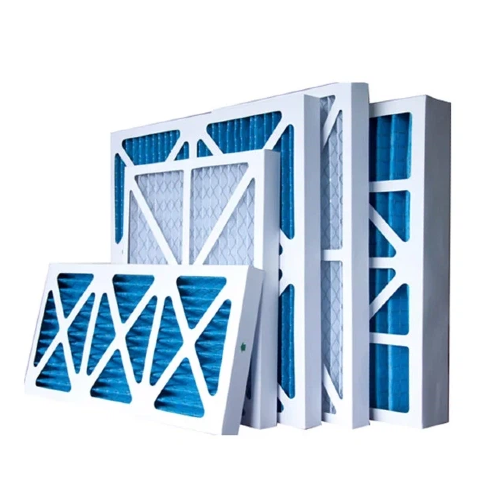
The new energy industry encompasses a range of sectors, each with specific cleanroom requirements. Solar panel production, semiconductor manufacturing, electric vehicle battery assembly, and wind turbine production all rely on highly controlled environments to maintain product integrity and performance.
In solar panel production, for instance, even the smallest particle of dust can negatively impact the efficiency of the panel. The same holds true for semiconductor chips, where dust particles and chemical contamination can cause circuit failures. For battery production, particularly for electric vehicles, any particulate contamination in the assembly process can reduce battery life and performance, directly impacting consumer safety and product reliability.
As the industry grows, the demand for cleaner, more efficient manufacturing environments increases, making pleated filters a critical part of the air filtration systems used in these cleanrooms. Their ability to filter out small particles while maintaining airflow makes them ideal for applications in which high precision and contamination control are essential.
The cleanroom challenges in the new energy industry are unique due to the sensitivity of the products being manufactured. These include:
Airborne Contaminants: Fine dust, pollutants, and microbes can significantly affect the performance and quality of products in sectors like solar, battery, and semiconductor manufacturing.
Chemical Pollutants: Processes such as painting or chemical etching can introduce toxic vapors or chemical pollutants into the air, which must be filtered out to prevent contamination of products.
Temperature and Humidity Control: In some cleanrooms, temperature and humidity control are also essential to prevent contamination and ensure proper product formation, further adding to the complexity of filtration requirements.
Pleated filters are designed to tackle these challenges by providing high-efficiency filtration to remove a wide variety of contaminants, both solid particles and chemical pollutants, ensuring a stable and controlled environment for production.
Pleated filters are capable of maintaining high filtration efficiency while allowing for sufficient airflow in new energy cleanrooms. Their ability to trap fine particles, such as dust and chemical vapors, ensures that products like solar panels, microchips, and batteries remain free from contaminants that could otherwise degrade performance or functionality. Moreover, the long service life of pleated filters helps reduce the frequency of filter changes, which can be costly and time-consuming.
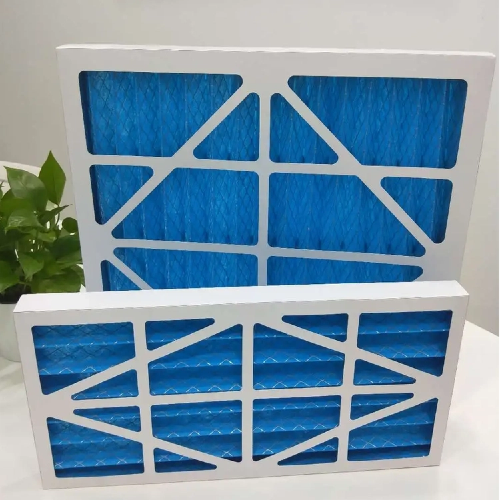
Modern pleated filters utilize advanced materials to achieve superior filtration performance. For example, filters made from high-performance fiberglass, polyester, and electrostatically charged fibers can capture a broader range of contaminants, ensuring that the cleanroom environment remains free from harmful particles.
The development of new filter media technology, such as materials that enhance the capture of both large and ultra-fine particles, makes pleated filters increasingly effective in demanding applications such as semiconductor manufacturing and pharmaceutical production.
Pleated filters are often integrated into broader air purification systems, such as Fan Filter Units (FFUs), air showers, and HVAC systems, to provide comprehensive filtration solutions. These systems work together to maintain consistent airflow, air quality, and pressure control throughout the cleanroom environment, further improving manufacturing efficiency.
By combining pleated filters with other air filtration technologies, manufacturers in the new energy industry can achieve superior cleanroom conditions, ensuring that their products meet the highest quality standards.
In solar panel manufacturing, maintaining a clean environment is crucial to ensuring high efficiency and performance. One manufacturer implemented pleated filters in their cleanroom air filtration system, leading to a noticeable reduction in particle contamination. As a result, the quality of their solar panels improved, and the manufacturing process became more efficient.
In semiconductor production, even the smallest airborne particles can cause defects in microchips. A major semiconductor company upgraded their cleanroom air filtration system with pleated HEPA filters. This upgrade allowed them to meet strict cleanliness requirements and improve the yield of their production process, leading to better performance and fewer defects in their microchips.
For electric vehicle battery manufacturers, maintaining a contamination-free environment is essential. Pleated filters were used in their cleanroom to ensure that particulate contamination was minimized. This not only improved battery performance but also extended battery life, enhancing the product's overall reliability.
Pleated filters are vital to the success of cleanroom environments in the new energy industry. Their ability to efficiently filter out contaminants while maintaining optimal airflow makes them a key component in ensuring product quality and manufacturing efficiency.
As the new energy sector continues to expand, the demand for advanced filtration technologies will only increase. Future innovations in pleated filters will focus on improving their efficiency, reducing energy consumption, and integrating advanced materials to meet the ever-growing needs of cleanroom environments in industries like solar, battery, and semiconductor manufacturing.