English
- All
- Product Name
- Product Keyword
- Product Model
- Product Summary
- Product Description
- Multi Field Search
Views: 0 Author: Site Editor Publish Time: 2026-10-14 Origin: Site
Walk onto the production floor of any modern coating or food processing facility, and the intense thermal environment immediately hits you. Temperatures inside these industrial baking and curing ovens routinely exceed 250 degrees Celsius. Sometimes, they push well past the 500-degree mark. Under these brutal conditions, precision is an absolute necessity rather than a mere goal. Airborne contaminants, volatile organic compounds, and uneven airflow will completely ruin a production run. Consequently, plant managers face rejected batches, wasted energy, and severe equipment degradation.
The unsung hero mitigating these daily disasters is specialized thermal filtration. By maintaining pristine air purity and thermal consistency, these engineered components keep production lines moving without a hitch. This technical guide breaks down how robust filtration systems function on the factory floor. We will explore why they are indispensable for curing processes and how to select the exact specifications tailored to your operational demands.
Quality Control: Specialized high temperature filtration prevents particulate contamination. This ensures flawless surface finishes in automotive curing and strict sanitary conditions in food production.
Temperature Uniformity: Maintaining optimal aerodynamics through proper filtration prevents localized hot and cold spots inside the thermal chamber.
Equipment Protection: Deploying robust pre-filtration shields sensitive internal burner components from premature wear and drastically reduces fire risks.
Cost Efficiency: Investing in the correct heat-resistant materials lowers Variable Frequency Drive energy consumption and minimizes expensive product defect rates.
Recent market analyses of the industrial thermal processing sector reveal a definitive shift toward stringent emission controls and energy-efficient manufacturing. Driven by tighter environmental regulations and volatile energy costs, facility engineers are rapidly abandoning basic ventilation setups. Today, advanced thermal filtration is no longer viewed as an optional upgrade. Instead, it serves as a baseline compliance requirement to guarantee zero-defect production. Furthermore, the rising integration of smart sensors in modern ovens means that pressure drop across filter banks is monitored in real-time, forcing plants to adopt high-capacity filters that maintain aerodynamic efficiency over longer lifecycles.
To maintain operational integrity in high-stakes manufacturing, maintenance teams must understand the specific engineering behind these thermal systems. Standard commercial filters simply cannot survive the realities of industrial baking.
A high temperature resistant filter is a specialized air purification unit designed to operate continuously in extreme heat. Standard commercial HVAC filters rely on synthetic media, cardboard frames, and basic polyurethane adhesives. When exposed to temperatures above 90 degrees Celsius, those standard units melt, catch fire, or release toxic off-gassing. In stark contrast, industrial thermal filters maintain absolute structural integrity. They utilize rigid frames and specialized sealants to capture microscopic particulates safely, all without choking the critical airflow required for convection heating.
The true effectiveness of these components relies entirely on advanced material science. Utilizing premium Heat Resistant Filter Media guarantees that the core element will not melt, shed glass fibers, or emit chemical fumes under continuous thermal stress.
In practice, manufacturers deploy ultra-fine micro-glass fibers, advanced ceramic fibers, or woven stainless steel mesh. Micro-glass fibers are highly effective at capturing fine dust and are typically rated for continuous use up to 250 degrees Celsius. For heavy-duty aerospace or metallurgical environments reaching 400 degrees Celsius, ceramic fibers become mandatory. Specifically, the media is often pleated with corrugated aluminum separators. These rigid metal separators prevent the pleats from collapsing under high fan velocity, ensuring the entire surface area remains active for maximum dust holding capacity.
Different manufacturing sectors face entirely unique challenges during thermal processing. Applying a reliable filtration strategy directly impacts industry-specific compliance and long-term profitability.
In the automotive and aerospace sectors, curing chambers dry and harden paints, powder coatings, and composite resins. Here, an Oven Air Filter acts as the ultimate quality control safeguard.
Imagine an engineer pulling a freshly coated automotive panel from the chamber. If a single microscopic rust particle settles on the wet paint, it creates severe visual defects. In the coating industry, this contamination leads to fisheyes, blistering, or cratering on the clear coat. By meticulously filtering the recirculated air, teams ensure a pristine curing environment. This results in flawless film adhesion and a drastic reduction in labor-intensive sanding and rework.
Shifting focus to the food processing industry, baking and drying ovens require rigid adherence to hygiene protocols and HACCP standards. The primary concern is preventing cross-facility contamination.
As hot air circulates over baking pastries or dehydrating fruits, it must be completely devoid of facility dust and rust flakes from aging ductwork. Specialized thermal filters ensure that both the makeup air and recirculated air remain strictly sanitary. Without this level of protection, food manufacturers risk severe regulatory audits, devastating product recalls, and irreparable damage to brand trust.
Understanding the functional engineering benefits helps plant managers justify the initial investment in premium filtration.
Industrial ovens are highly sensitive thermodynamic machines. To bake or cure a product evenly, the temperature inside the chamber must remain perfectly uniform across all zones. Degraded or low-quality filters severely restrict the volume of air passing through the heating coils. This bottleneck disrupts the convection process, inevitably creating localized hot and cold spots. Products passing through a cold zone emerge under-cured, while those trapped in a hot spot burn or become brittle. A structurally sound filter guarantees the optimal aerodynamic flow required to maintain tight temperature tolerances.
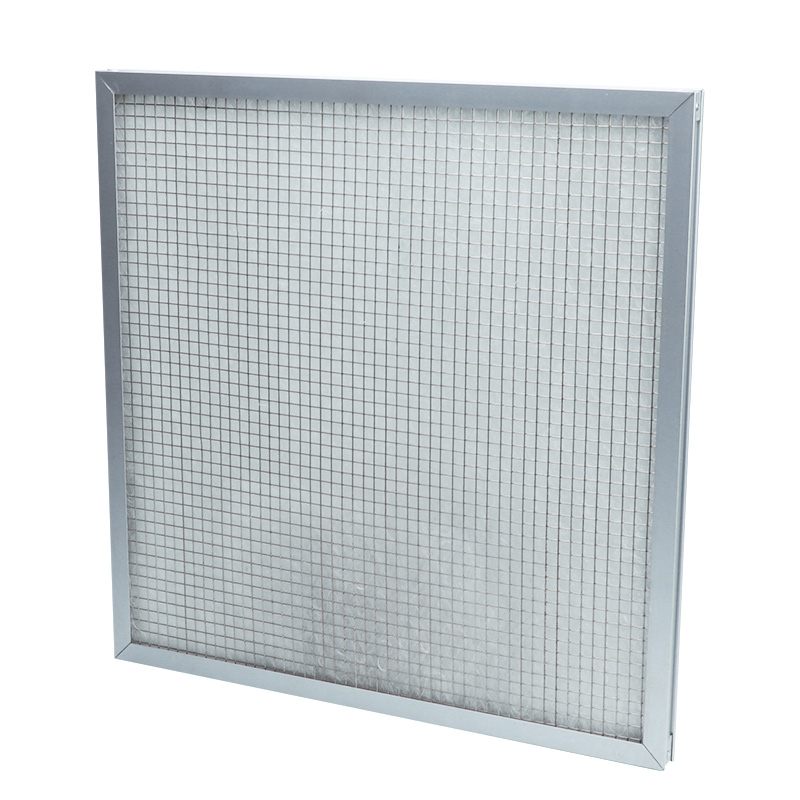
Beyond product quality, ovens are packed with sensitive internal components like bare heating elements, burner nozzles, and exhaust blowers. Implementing a High Temperature Coarse Air Filter as a primary defense line is vital for machinery longevity. These pre-filters capture abrasive debris before they ever reach the heating elements. If debris accumulates on heating coils, it acts as a thermal insulator, causing the coils to overheat and short out prematurely. More importantly, trapping combustible lint before it contacts a direct heat source significantly reduces the risk of catastrophic ductwork fires.
Procuring the correct filter requires carefully matching technical specifications to the operational realities of your specific equipment. Facility managers should evaluate the following criteria to avoid premature system failure.
The most critical specification is the thermal rating. Engineers must differentiate between continuous operating temperature and peak temperature limits. Continuous temperature refers to the maximum heat the filter can withstand around the clock without degrading. Conversely, peak temperature is the maximum heat it can survive for short durations, such as a brief heat-cleaning cycle. Installing a filter rated only for a peak of 250 degrees Celsius in an oven that runs continuously at that temperature will result in rapid sealant melting and media collapse.
Filter media is only as reliable as the frame holding it and the sealant preventing air bypass. Under extreme heat, metal expands dramatically. Therefore, high-temperature units must utilize frames made from galvanized steel, extruded aluminum, or stainless steel to prevent warping. Additionally, the media must be bonded to the frame using specialized heat-resistant sealants. Red silicone is standard for environments up to 250 degrees Celsius, while rigid ceramic cements are deployed for higher temperatures. This ensures dirty air never bypasses the media through microscopic gaps.
To illustrate the stark differences in construction, review the technical breakdown below. This highlights why standard commercial units fail in thermal applications.
Component / Feature | Standard Commercial HVAC Filter | High-Temperature Industrial Filter |
|---|---|---|
Filter Media | Synthetic blends or cotton-polyester | Ultra-fine micro-glass, ceramic fiber, or stainless steel mesh |
Frame Material | Die-cut cardboard or thin beverage board | Galvanized steel, aluminum, or 304 stainless steel |
Sealant Type | Standard polyurethane or hot melt glue | Red silicone or rigid ceramic cement |
Continuous Temp Limit | Up to 90 degrees Celsius | 250 to 500 degrees Celsius depending on design |
Even the most robustly engineered filters have a finite lifespan. Operating an oven with a compromised unit leads to cascading failures across both production lines and internal machinery. Maintenance teams must monitor empirical data rather than relying solely on a calendar.
Watch for these crucial operational red flags on the factory floor:
Unexplained Pressure Drop: If the differential pressure gauge across the filter bank reads higher than the manufacturer limit, the media is fully loaded and choking the blower fan.
Temperature Fluctuations: An inability for the PLC to maintain a steady setpoint often indicates severe airflow restriction caused by a clogged filter.
Visible Defect Rates: The most costly sign of failure is an increase in rejected parts. If dust appears on finished goods, the filter is either bypassing air or physically breaking down.
Physical Degradation: During routine cool-down inspections, look for warped metal frames, cracked ceramic sealants, or dark and brittle media. Any structural compromise means the unit must be pulled immediately.
The financial stakes in industrial manufacturing are simply too high to rely on unverified, bargain-tier filtration products. A single catastrophic blowout can result in thousands of dollars in ruined inventory and unscheduled downtime.
It is crucial to source products from manufacturers who subject their materials to rigorous thermal and aerodynamic testing. Premium suppliers ensure that their media will not shed glass fibers into the airstream or release toxic fumes when pushed to peak temperatures. By investing in engineered solutions tailored to your specific thermal dynamics, you protect your heating equipment, secure your product quality, and optimize your long-term energy expenditures. We highly encourage engineering teams to audit their current oven setups and consult with specialized manufacturers at Vitefilter to find the exact high-performance solution for their production lines.
The maximum threshold depends entirely on the construction materials. Standard high-temperature filters using specialized fiberglass can typically withstand continuous temperatures around 250 degrees Celsius and peak temperatures up to 300 degrees Celsius. For extreme metallurgical or aerospace environments, filters constructed with advanced ceramic fibers or woven stainless steel mesh operate safely in temperatures ranging from 400 to over 500 degrees Celsius without losing structural integrity.
Absolutely not. Standard commercial HVAC filters are manufactured using synthetic media, cardboard frames, and standard chemical adhesives. When exposed to the extreme environment of an industrial oven, these materials will rapidly melt, release toxic off-gassing, or catch fire. Industrial thermal chambers require purpose-built components designed specifically to handle severe thermal expansion and continuous stress.
A very brief period of light smoke or odor is common during the initial heat-up cycle of a brand-new high-temperature filter. This occurs because the specialized binders and silicone sealants are curing and burning off microscopic manufacturing residues. This process, known as off-gassing, usually dissipates within the first few hours of operation at high temperatures. However, if heavy smoke persists, immediately shut down the oven as it indicates the filter is not rated for your operating temperature.
Every air filter creates resistance to airflow, measured as pressure drop. As the filter captures dust over time, this resistance increases. To maintain the required air volume for convection heating, the oven variable frequency drive must push the blower motors harder to overcome the blockage. A heavily clogged filter forces the motors to draw significantly more electricity, driving up monthly utility costs. Replacing filters at the correct pressure drop threshold optimizes aerodynamic efficiency and saves energy.
To survive continuous extreme heat, the media is composed entirely of non-combustible materials. The most common engineering components include ultra-fine micro-glass fibers, advanced ceramic fibers, or pleated stainless steel wire mesh. Crucially, these materials are bound together using mechanical methods or specialized high-heat binders. This completely avoids the use of standard combustible resins or glues that would disintegrate in an oven environment.