English
- All
- Product Name
- Product Keyword
- Product Model
- Product Summary
- Product Description
- Multi Field Search
Views: 0 Author: Site Editor Publish Time: 2026-02-25 Origin: Site
Pharmaceutical production operates under some of the strictest environmental control standards in the world. Every stage of manufacturing, from raw material handling to sterile filling and final packaging, must take place in conditions that prevent contamination and ensure product integrity. In this highly regulated environment, the HEPA filter is not just another component of the ventilation system—it is a fundamental safeguard.
Unlike a standard air filter used in commercial buildings, a HEPA filter is specifically designed to capture extremely fine particles, including dust, microorganisms, and airborne contaminants that could compromise drug safety. In pharmaceutical production, air cleanliness directly affects product quality, regulatory compliance, and ultimately patient health. This is why HEPA filtration systems are considered essential infrastructure rather than optional equipment.
Understanding the importance of HEPA filters in pharmaceutical production requires examining contamination risks, cleanroom standards, HVAC system design, regulatory validation, and long-term operational reliability.
Pharmaceutical products are often administered directly into the human body. Tablets are ingested, injectables enter the bloodstream, inhalation therapies reach the lungs, and sterile solutions are applied to sensitive tissues. Because of this, even microscopic contamination can cause serious health consequences.
Airborne contamination can enter the production process in subtle ways. Personnel movement, material transfer, equipment vibration, and even airflow turbulence can introduce particles into controlled areas. In sterile manufacturing zones, open products may be exposed to the surrounding air for short periods, making environmental control absolutely critical.
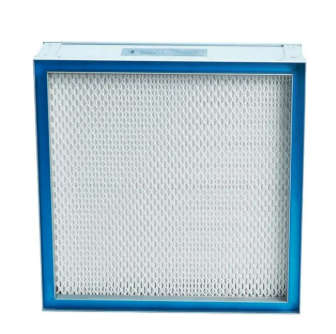
This is where the HEPA filter becomes indispensable. By removing at least 99.97 percent of particles at 0.3 microns, a properly installed HEPA filter dramatically reduces the concentration of airborne contaminants. The result is a controlled environment that supports sterile manufacturing conditions and protects product integrity.
Without high-efficiency air filtration, pharmaceutical facilities would struggle to maintain the cleanliness levels required by global health authorities.
Pharmaceutical manufacturing is governed by international standards such as ISO 14644, EU GMP, FDA regulations, and WHO GMP guidelines. These frameworks define strict limits for airborne particle counts in different production areas.
Critical sterile filling zones often require ISO Class 5 or EU Grade A environments. These classifications demand extremely low particle concentrations, which can only be achieved through high-efficiency air filtration systems. HEPA filters are therefore installed as terminal filters in cleanroom ceilings, laminar airflow units, and air handling systems.
In less critical but still controlled areas, such as preparation rooms or packaging zones, slightly lower classifications may apply. Even in these spaces, HEPA filtration is often used to provide an additional layer of protection against contamination.
The ability to consistently meet these classifications depends heavily on the performance and integrity of the HEPA filter.
Pharmaceutical facilities rely on multi-stage air filtration systems to maintain stable and clean airflow. The HEPA filter typically serves as the final stage of this system.
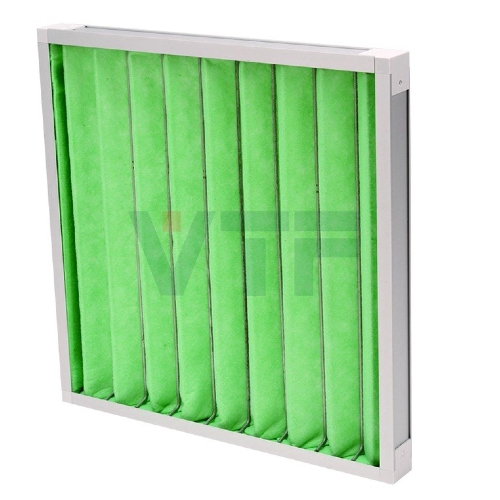
Air entering the facility first passes through pre-filtration stages that remove larger particles. It then flows through medium-efficiency filters that capture finer dust. By the time the air reaches the HEPA filter, much of the particulate load has already been reduced. The HEPA filter then removes the smallest and most critical contaminants before air enters the cleanroom.
This layered design improves efficiency and extends the lifespan of the terminal filter. It also ensures stable pressure conditions and balanced airflow throughout the cleanroom environment.
In aseptic processing areas, HEPA-filtered air is often supplied in a unidirectional vertical flow pattern. This controlled airflow sweeps particles away from exposed products and minimizes turbulence. By carefully controlling air velocity and direction, the filtration system creates a protective barrier around sensitive operations.
Aseptic manufacturing is one of the most sensitive areas in pharmaceutical production. During sterile filling, products are exposed to the surrounding environment before final sealing. Even minimal airborne contamination during this stage can result in batch rejection or regulatory non-compliance.
HEPA filters provide the clean airflow necessary to maintain sterile conditions. Installed in laminar flow ceilings or localized clean air units, they supply filtered air directly above filling lines. This airflow pushes contaminants downward and away from the product zone.
In these environments, the reliability of the HEPA filter is directly linked to product safety. A failure in filter integrity could compromise an entire production run.
For this reason, pharmaceutical companies treat HEPA filtration as a critical control point in their contamination control strategy.
Pharmaceutical facilities often manufacture multiple products within the same building. Without proper environmental control, cross-contamination between active pharmaceutical ingredients can occur.
HEPA filters help reduce this risk by maintaining clean and controlled airflow between production areas. Combined with pressure differentials and airlocks, HEPA filtration systems create physical separation between zones.
In high-potency drug manufacturing, such as oncology products, strict containment measures are required. HEPA filtration supports both product protection and personnel safety by controlling airborne particles within confined production spaces.
By minimizing airborne transmission of active compounds, HEPA filters contribute to safer multi-product manufacturing operations.
Pharmaceutical production is subject to rigorous inspection and documentation requirements. Cleanroom performance must be validated before operations begin and periodically revalidated throughout the facility’s lifecycle.
HEPA filters undergo integrity testing using aerosol challenge methods to verify that there are no leaks or bypass airflow. This process ensures that the filter performs according to its specified efficiency.
Validation procedures also include airflow visualization studies, particle count measurements, and pressure monitoring. All results must be documented and retained as part of GMP compliance records.
If a HEPA filter fails an integrity test, it must be repaired or replaced immediately. Regulatory authorities consider filtration performance a critical element of environmental control.
The presence of a properly tested and documented HEPA filter system demonstrates a facility’s commitment to compliance and product safety.
Airborne contamination does not only affect sterile products. Even in non-sterile pharmaceutical production, excess particulate matter can influence product stability, appearance, and quality.
Powder blending, tablet compression, and capsule filling all generate airborne dust. Without effective air filtration, particles may re-enter the production process or settle onto equipment surfaces.
HEPA filters help maintain cleaner production environments, which reduces cleaning frequency and improves overall operational efficiency. Consistent air quality also supports better control over environmental variables that can influence product stability.
By reducing contamination risks, HEPA filtration indirectly contributes to extended product shelf life and improved batch consistency.
One concern often associated with HEPA filters is airflow resistance. High-efficiency filtration can increase system pressure drop, leading to higher energy consumption.
Modern HEPA filter designs address this challenge by optimizing pleat structure and filter media composition. Advanced glass fiber media and mini-pleat configurations help maintain high efficiency while reducing resistance.
In pharmaceutical facilities, HVAC systems operate continuously. Even small improvements in air filter efficiency can lead to significant energy savings over time.
Balancing filtration performance with energy efficiency is now an important consideration in cleanroom design. However, under no circumstances can efficiency compromise filtration effectiveness in critical production areas.
HEPA filters require careful monitoring throughout their service life. As particles accumulate, resistance increases. Facilities use differential pressure gauges to track filter loading and determine appropriate replacement timing.
Routine inspections ensure that seals remain intact and that no mechanical damage has occurred. In pharmaceutical production, proactive maintenance is preferred over reactive replacement. Scheduled filter changes help prevent unexpected failures that could disrupt operations.
Environmental monitoring systems also track airborne particle counts in real time. If particle levels rise unexpectedly, filtration performance is one of the first factors investigated.
By maintaining strict control over filter lifecycle management, pharmaceutical manufacturers ensure continuous compliance and production stability.
The importance of the HEPA filter extends beyond technical filtration performance. It represents a commitment to patient safety, regulatory compliance, and operational excellence.
Pharmaceutical manufacturing is built on trust. Patients trust that medications are produced under controlled conditions. Regulatory agencies trust that facilities follow established guidelines. Healthcare providers trust that products meet strict quality standards.
HEPA filtration systems support all of these expectations. They form a critical barrier between the production environment and potential contamination sources.
Without reliable HEPA filters, modern pharmaceutical production would not meet global safety standards.
HEPA filters are important in pharmaceutical production because they provide the high-efficiency air filtration necessary to maintain cleanroom classifications, protect product integrity, and ensure regulatory compliance.
From aseptic filling lines to laboratory testing areas, the HEPA filter serves as the final and most critical stage of the air filter system. It removes microscopic airborne contaminants that could otherwise compromise sterile manufacturing processes.
By supporting contamination control, preventing cross-product exposure, maintaining validated cleanroom performance, and contributing to operational stability, HEPA filters play a foundational role in pharmaceutical manufacturing.
In an industry where precision, safety, and reliability are paramount, the HEPA filter is not merely a component of the ventilation system. It is a core element of pharmaceutical quality assurance and a vital protector of patient health.