English

- All
- Product Name
- Product Keyword
- Product Model
- Product Summary
- Product Description
- Multi Field Search
Views: 0 Author: Site Editor Publish Time: 2026-10-22 Origin: Site
Are invisible gases harming your factory workers?
Standard particulate filters often miss toxic volatile organic compounds and harsh industrial odors. Left unaddressed, these invisible threats inevitably lead to severe regulatory fines, structural corrosion, and escalating health risks for your staff. In this comprehensive guide, you will discover how an advanced activated carbon system solves this exact problem efficiently. Implementing the right setup protects both your personnel and your bottom line.
Activated carbon filters utilize a molecular process called adsorption to trap harmful gaseous pollutants, volatile organic compounds, and noxious odors at the microscopic level.
In a standard industrial air filtration architecture, gas-phase filtration is strictly positioned as the final polishing stage. It must always be installed downstream from particulate pre-filters to prevent premature pore clogging.
Industrial applications demand specific media formats. These range from heavy-duty deep-bed pellet systems to flexible activated carbon cloth, heavily depending on airflow velocity and contaminant concentration.
System engineering relies entirely on calculating precise residence time to ensure the carbon media achieves maximum removal efficiency.
For specific inorganic threats like hydrogen sulfide or ammonia, standard physical adsorption is insufficient. Specialized chemisorption using chemically impregnated carbon is strictly required.
To understand why this filtration method remains the undisputed industrial standard for gas-phase purification, it is necessary to examine the mechanisms operating at the molecular level. Activated carbon does not act as a physical sieve catching debris. Rather, it operates through a highly efficient process known as adsorption.
Physical adsorption relies on a staggering internal surface area. To put this into perspective, just one gram of high-quality activated carbon can possess a surface area larger than a football field. When contaminated air is pulled through the ventilation shaft, gas molecules are drawn to the surface of the carbon through Van der Waals forces. These weak intermolecular attractions cause the volatile organic compounds and odor molecules to adhere tightly to the carbon surface. They are effectively trapped like a molecular sponge. Because this is a physical process, it is highly effective for a broad spectrum of high-molecular-weight organic compounds.
Conversely, certain industrial gases are simply too light or volatile to be captured by physical forces alone. This is exactly where chemical adsorption becomes necessary. During this process, the carbon substrate is impregnated with specific chemical agents, such as potassium permanganate or sodium hydroxide. When target gases make contact with this treated carbon, an immediate chemical reaction occurs. This transforms the toxic gas into a harmless, solid byproduct permanently trapped within the filter matrix.
The overall efficacy of any carbon filter is dictated by its manufacturing process. Carbonaceous materials like coal, coconut shells, or wood undergo a rigorous activation process using steam or chemical treatments at extreme temperatures often exceeding 1000 degrees Celsius. This intense process strips away non-carbon elements and creates a vast, intricate network of microscopic pores.
Specifically, these pores are categorized by size to target different threats. Micropores under 2 nanometers are exceptionally ideal for capturing small, low-boiling-point solvent molecules. Mesopores ranging from 2 to 50 nanometers serve as critical transport channels and efficiently capture medium-sized molecules. Macropores larger than 50 nanometers act as the primary entryways, funneling air deep into the carbon structure. Selecting the correct base material ensures the filter is appropriately matched to the unique chemical footprint of your facility. For instance, coconut shell provides superior microporosity for light solvents, while coal offers excellent mesoporosity for heavier industrial compounds.
Investing in high-grade gas-phase filtration is rarely just about improving ambient air. Today, it is a critical regulatory and operational requirement for modern industrial facilities.
Recent industry analyses regarding industrial odor and volatile organic compound control systems reveal a definitive shift toward integrated gas-phase filtration. As urban sprawl increasingly pushes residential developments closer to established industrial parks, environmental agencies are tightening emission thresholds. Facility managers are now facing strict mandates that prioritize community well-being alongside worker safety. Consequently, outdated and reactive odor-masking techniques are being rapidly abandoned. Modern plants are instead investing heavily in multi-stage adsorption architectures to ensure continuous compliance and prevent costly operational shutdowns. This broader industry trend underscores a new reality. Treating gas-phase emissions is no longer just an environmental courtesy, but a core operational mandate driven by global sustainability goals and zero-tolerance nuisance odor policies.
Agencies at both federal and state levels enforce strict emission limits on hazardous air pollutants. Facilities engaged in chemical processing, automotive painting, or wastewater treatment risk severe financial penalties if exhaust air exceeds these permissible limits. Activated carbon systems provide a measurable, highly reliable method for bringing exhaust streams completely into compliance.
Walk onto any active chemical processing floor, and the immediate concern is ambient air safety. Inside the facility, occupational safety boards dictate strict permissible exposure limits for hundreds of airborne chemicals. Prolonged daily exposure to volatile organic compounds can cause acute symptoms like headaches and nausea, alongside chronic neurological or respiratory damage.
Furthermore, facilities located near residential or commercial zones frequently face aggressive nuisance odor complaints. Implementing a dedicated gas-phase intervention neutralizes mercaptans, amines, and other odor-causing compounds long before they exit the exhaust stack. This proactive approach allows facilities to maintain positive community relations and avoid legal injunctions.
A common, yet costly, engineering error is treating activated carbon as a standalone magic bullet. To function correctly, these filters must be strategically integrated into a broader, multi-stage filtration architecture.
Activated carbon must never serve as the first line of defense in an air handling unit. If dust, manufacturing grease, or other particulate matter reaches the carbon bed, it will instantly coat the material. This blinds the microscopic pores and renders the entire adsorption process impossible. A standard industrial sequence strictly follows a specific hierarchy. Medium-efficiency pre-filters capture coarse dust. Secondary high-efficiency filters handle fine smoke and aerosols. Finally, the carbon filter targets the remaining gases.
In heavy-duty environments generating massive chemical emissions, carbon beds are typically housed in dedicated exhaust stacks or deep-bed air scrubbers. These robust units are specifically engineered to handle highly contaminated air. They treat the airstream thoroughly in a single pass before it is discharged safely into the outside atmosphere.
By contrast, for general indoor air quality management, carbon filters are integrated directly into the facility existing makeup air units. By continuously purifying and recirculating indoor air rather than constantly conditioning raw outside air, facilities can significantly reduce their heating and cooling expenditures. All the while, they maintain exceptionally safe exposure levels for floor workers.
Matching the physical format of the carbon to your machinery specific airflow dynamics is essential for balancing filtration efficiency with energy consumption.
For demanding industrial applications battling high concentrations of volatile organic compounds, granular or pelletized carbon is the undisputed standard. These systems utilize deep trays filled with loose carbon pellets. While they offer the highest absolute capacity for gas adsorption and the longest operational lifespan, they also create significant air resistance. Consequently, robust, high-static exhaust fans are required to pull air through the dense media.
When integrating gas filtration into high-velocity commercial systems, V-Bank configurations are highly effective. The aerodynamic V-shaped geometry allows for a massive amount of carbon-loaded media to be packed into a standard frame. This clever design drastically increases the surface area exposed to the air stream. It maximizes adsorption while keeping the pressure drop entirely manageable for standard commercial blower fans.
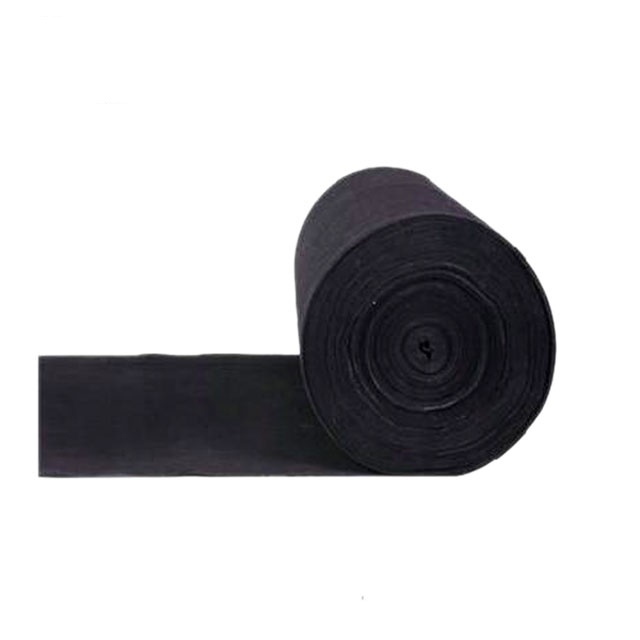
For applications requiring versatile integration, low pressure drop, or custom equipment sizing, an Activated Carbon Filter Cloth is an optimal engineering choice. This specialized material consists of a non-woven synthetic matrix uniformly impregnated with finely ground activated carbon powder. It is perfectly suited for lighter odor control, surface finishing environments, or as a protective pre-filter layer in cleanrooms where physical space is restricted and airflow simply cannot be compromised.
To implement a truly effective industrial air quality strategy, facility managers must understand the specific capabilities and limitations of gas-phase filtration. Activated carbon does not operate as a universal sponge for all airborne threats. Instead, its efficiency is dictated by the chemical properties, molecular weight, and boiling point of the target gases. When deployed correctly, an industrial Odour Removal Filter provides unparalleled control over volatile organic compounds and severe nuisance emissions.
The physical adsorption process relies heavily on Van der Waals forces. These forces are most effective on molecules with a high molecular weight and a low vapor pressure. Industrial facilities that utilize solvents, petrochemicals, and heavy adhesives generate massive amounts of these heavy gases. Standard particulate filters allow these gases to pass through unimpeded, but activated carbon excels at capturing them.
Common industrial contaminants easily trapped include aromatic hydrocarbons like benzene and toluene prevalent in painting. Aliphatic hydrocarbons commonly found in heavy-duty industrial degreasers are also easily captured. Furthermore, halogenated solvents utilized heavily in metal cleaning, alongside various alcohols and ketones from pharmaceutical manufacturing, are effectively neutralized.
Imagine a wastewater treatment plant on a humid summer afternoon. The primary threats are not heavy solvents, but corrosive, low-molecular-weight inorganic gases. While standard carbon is highly effective for heavy compounds, it struggles to retain these lighter, highly reactive emissions. To address these specific threats, the carbon must undergo chemisorption treatments.
Hydrogen sulfide is responsible for the classic rotten egg smell. Carbon impregnated with specific alkaline solutions actively oxidizes this gas into elemental sulfur, trapping it safely. Ammonia, common in agricultural processing, requires carbon treated with acidic compounds to react with and neutralize the alkaline gas on contact. Acidic gases generated by combustion processes require similar chemical treatments to prevent structural corrosion of facility electronics.
Managing expectations is a critical aspect of engineering an air filtration system. Without highly specialized chemical treatments, standard carbon beds will not capture extremely lightweight or stable gases. For example, carbon monoxide, carbon dioxide, and methane are simply too small and volatile to be held by physical adsorption. If a facility is dealing with high concentrations of these specific gases, thermal oxidizers or dedicated ventilation dilution strategies must be employed instead.
The most common point of failure in industrial odor control is not the quality of the carbon itself, but the poor engineering of the system housing it. Procuring the correct setup involves precise mathematical calculations. Guesswork inevitably leads to premature filter failure or completely inadequate air purification.
The most critical metric in gas-phase filtration is residence time, often referred to as dwell time. This represents the exact fraction of a second that a parcel of contaminated air spends traveling through the physical carbon bed. If the air moves too frantically, the gas molecules will not have sufficient time to diffuse into the microscopic pores. This results in immediate system breakthrough.
For light commercial odor control, a brief residence time of a fraction of a second may suffice. However, for heavy industrial removal, engineers typically design deep-bed systems to achieve a residence time of half a second or higher. Achieving this strict metric requires either strategically slowing down the airflow velocity or substantially increasing the physical thickness of the carbon bed.
Adding a dense Carbon Media Filter introduces significant static pressure resistance into the ventilation network. Facility engineers must thoroughly consult the fan curve of their existing exhaust blowers. If a high-density filter is installed without evaluating fan capacity, the system will experience a drastic reduction in total airflow volume. This leads to inadequate workspace ventilation, overheating machinery, and potential violations of occupational air exchange regulations. To combat this, engineers frequently upgrade to high-static-pressure centrifugal blowers or switch to low-resistance aerodynamic configurations.
Unlike standard particulate filters that visibly accumulate dust and debris, gas-phase filters offer absolutely no visual cues when they are exhausted. A fully saturated carbon bed looks exactly the same as a brand-new one. Facility managers must rely on scientific testing and predictive maintenance to manage the total cost of ownership effectively.
When the microscopic pores are completely filled with gas molecules, the filter reaches its breakthrough point, allowing toxic gases to pass through unabated. To accurately monitor this saturation, industrial facilities utilize objective methods. Electronic detectors can be installed downstream to continuously monitor exhaust air, triggering an alarm when gas levels rise. Alternatively, maintenance teams can extract small core samples of the carbon media and send them to a laboratory to test the remaining adsorptive capacity.
Lifespan is entirely dependent on the continuous concentration of the target gas and the total weight of the carbon media. In a heavy industrial coating facility operating around the clock, a carbon bed may reach total saturation in just a few months. In a lighter commercial building, it might last well over a year.
Disposal requires careful attention to regulatory compliance. Because activated carbon physically traps contaminants, the spent media inherits the exact toxicity of the gases it absorbed. If the filter captured heavy metals or highly toxic solvents, the saturated carbon must be legally classified as hazardous waste and transported in strict accordance with local environmental guidelines.
Proper gas-phase filtration is absolutely vital for modern industrial safety. An advanced filtration system effectively stops dangerous airborne chemicals, bridging the critical gap beyond standard particulate control. However, success requires exact sizing, proper physical placement directly after pre-filters, and calculating precise dwell times to maximize media lifespan. By selecting the appropriate media format, facilities can confidently ensure strict regulatory compliance, protect worker health, and maintain seamless operational efficiency. If you are looking to upgrade your facility air quality, explore the high-performance Activated Carbon Filter solutions at Vitefilter to find the exact engineering match for your specific industrial application.
No. While the physical structure might catch large dust particles, doing so will quickly clog the microscopic pores and ruin the filter ability to absorb gases. You must always use a dedicated particulate pre-filter to protect the carbon media.
Generally, no. Washing the cloth with water will not release the trapped chemical gases and will likely destroy the delicate pore structure of the carbon. Once the adsorption capacity is fully reached, the media must be completely replaced to maintain safety standards.
Lifespan varies wildly based on contaminant concentration, airflow velocity, and total carbon weight. In heavy industrial settings, saturation may occur in three to six months. Meanwhile, lighter commercial applications may see lifespans extending up to a full year before replacement is necessary.
HEPA filters are designed to trap physical, solid particles like smoke, dust, and aerosols down to microscopic sizes. Conversely, an odour removal filter utilizes carbon to trap invisible gases, chemical vapors, and volatile compounds that exist at the molecular level and are small enough to pass directly through a HEPA filter unimpeded.