English

- All
- Product Name
- Product Keyword
- Product Model
- Product Summary
- Product Description
- Multi Field Search
Views: 0 Author: Site Editor Publish Time: 2026-11-16 Origin: Site
Proper air filtration acts as the mechanical lungs of commercial, industrial, and residential facilities. It safeguards human health. It protects delicate machinery from premature wear. Yet, a surprising number of facility managers treat all synthetic media as identical commodities. Buying bulk media without analyzing its structural specifications is a costly mistake. It inevitably triggers a cascade of operational headaches. Restricted system airflow is just the beginning. Catastrophic filter blowouts often follow, leaving downstream coils completely caked in debris.
To truly maximize performance, you must understand the underlying science of your filtration materials. This comprehensive guide breaks down the critical metrics required for precise specification. By mastering these technical details, you can transition from blind purchasing to making data-driven decisions that perfectly match your exact operating environment.
The global HVAC landscape is currently undergoing a massive shift. Facilities face rising energy costs and increasingly strict indoor air quality regulations. Consequently, the industry is moving rapidly toward low-pressure-drop synthetic media. Engineers are prioritizing materials that capture sub-micron particles without overworking blower motors. This modern trend makes precise specification more critical than ever. Selecting the correct density is no longer a minor maintenance detail; it is a core component of a building's overall energy management strategy.
To make informed procurement decisions, maintenance contractors must first grasp the fundamental construction of synthetic filtration media. Understanding the standardized metrics used to evaluate them is the first step toward optimization.
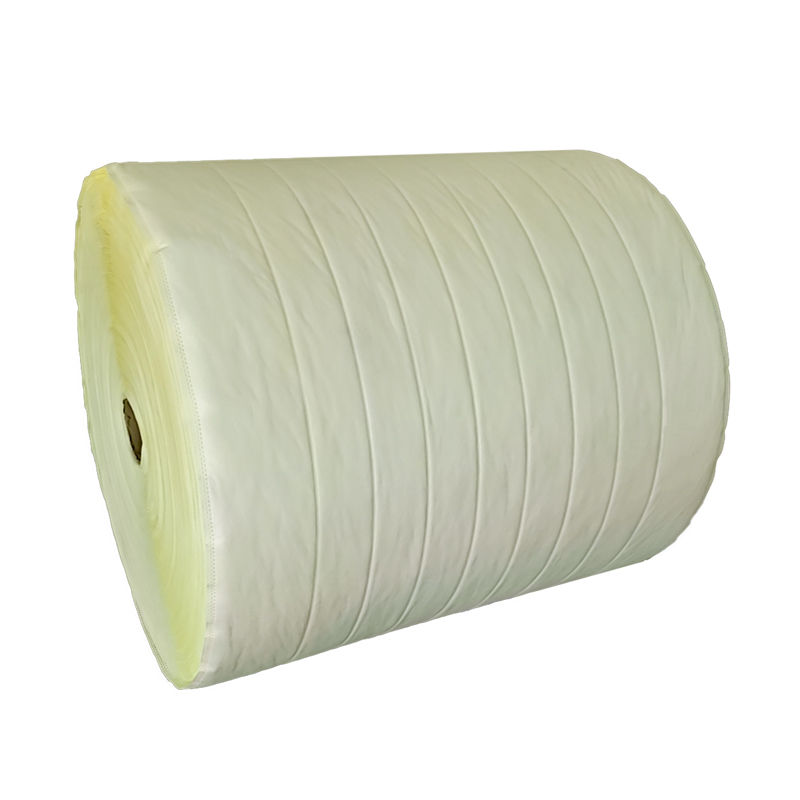
Manufactured through advanced mechanical entanglement and thermal bonding, Polyester Air Filter Rolls represent a massive leap over legacy materials. The production process involves carding and cross-lapping synthetic fibers to create a cohesive, highly durable fabric. Unlike older fiberglass alternatives, this synthetic matrix is inherently moisture-resistant. If exposed to a high-humidity environment, the material will not degrade, collapse, or provide a food source for microbial growth. This structural stability makes it an exceptional choice for maintaining pristine indoor air quality, even in damp or volatile conditions.
In the realm of technical textiles, GSM stands for Grams per Square Meter. If you cut a precise one-meter by one-meter square of the filter media and weigh it on a calibrated scale, that resulting number is your baseline metric. This weight directly correlates to several critical performance indicators. A heavier fabric generally indicates a denser fiber network. This translates to a higher MERV, or Minimum Efficiency Reporting Value, equivalent rating and vastly superior dust-holding capacity. However, this increased density simultaneously generates higher initial air resistance. Therefore, selecting the correct weight is a delicate exercise in balancing thorough particulate capture against the mechanical limits of your blower motor.
Matching the correct density range to your specific application is paramount. Abstract weight numbers mean very little without real-world context. Below is a breakdown of how different weights align with standard filtration classes and operational environments.
Filter media weighing between 100 and 200 grams is engineered specifically for first-stage pre-filtration. Highly porous and lightweight, these rolls allow for maximum airflow. They effectively capture coarse particulates like lint, hair, and heavy dust. You will frequently see this material deployed in residential HVAC systems, window air conditioning units, and as protective sacrificial layers for highly sensitive HEPA arrays. By capturing the largest debris without restricting air velocity, this lighter media reduces mechanical strain on blower motors. It significantly extends the lifespan of secondary filters downstream.
Representing the industry standard for general commercial and light industrial applications, the 250 to 400 range offers the most effective compromise between sustained airflow and fine particulate capture. Facility managers frequently utilize this mid-range density for commercial building air handlers, general industrial prep units, and spray booth cross-draft filters. In a busy automotive paint booth, for instance, a 300-weight filter effectively traps sticky paint overspray. It does this without disrupting the laminar airflow required to achieve a flawless, glass-like finish on a vehicle.
Environments characterized by extreme particulate generation strictly require heavy-duty media weighing 500 grams or more. These thick, dense rolls are capable of swallowing massive amounts of fine dust, metal shavings, or chemical powders. Typical installations include heavy metalworking facilities, welding shops, and ceiling diffusion plenums. While the depth-loading capacity here is exceptional, the mechanical trade-off is steep. The densely packed fiber matrix creates significant air resistance. These rolls must only be paired with high-static blower motors capable of overcoming the initial pressure drop.
| GSM Range | Filter Class Equivalent | Typical Thickness | Initial Resistance | Ideal Application |
|---|---|---|---|---|
| 150 to 200 | G3 to G4 | 10mm to 20mm | Approx. 25 Pa | Residential HVAC, Sacrificial Pre-filters |
| 250 to 400 | F5 to F6 | 20mm to 25mm | Approx. 40 Pa | Commercial Air Handlers, Paint Booths |
| 500 and Above | F7 to F9 | 25mm and above | Approx. 60 Pa | Industrial Dust Collection, Hospital Plenums |
While weight dictates the overall mass of the media, it only solves half of the filtration equation. To fully leverage the material's capabilities, buyers must examine the microscopic architecture of the fibers themselves.
Serving as a crucial textile measurement, Fiber Denier determines the exact thickness and diameter of the individual synthetic filaments used to construct the roll. A low number indicates a micro-fine, highly flexible thread. Conversely, a high number points to a coarse, rigid, and thick filament. The strategic combination of these varying thicknesses within a single fabric dictates exactly how air and airborne debris navigate the maze-like pathways of the filter.
Advanced media utilizes a progressive density structure. In this sophisticated multi-layered design, coarse fibers are positioned on the air-entry side. Micro-fine fibers are densely packed on the air-exit side. This specific configuration maximizes the efficiency of the fabric's weight. The coarse front layer traps larger particles like a sieve, leaving the tighter pathways at the back wide open to capture microscopic, lung-damaging dust. If a heavy roll is manufactured poorly, using uniform fine fibers throughout its entire depth, it will experience rapid face-loading. Dust will immediately form a solid cake on the front surface, choking off the airflow and rendering the remaining thickness completely useless.
Industrial air filtration is a physically violent process. The media must withstand constant, forceful air pressure without bowing, sagging, or losing its structural integrity over months of continuous operation.
Measuring the maximum amount of stress the non-woven fabric can endure before permanent deformation, Tensile Strength is a non-negotiable metric. In an active system, the air velocity exerts relentless pressure against the filter face. If the material is weak, it will eventually tear. A torn filter constitutes a catastrophic failure in an industrial setting. It creates a high-velocity bypass where trapped dirt and unfiltered incoming air rush through the breach. This contaminates the clean air stream and ruins sensitive downstream equipment.
Generally speaking, a positive correlation exists between weight and durability. A heavier, denser fabric naturally contains more physical material to resist tearing. However, mass alone does not guarantee survival under high pressure. The manufacturing techniques utilized to bind the fibers are what truly secure the roll's operational integrity. Premium rolls utilize thermal bonding, melting the fibers together at microscopic intersection points. For extreme velocity applications, manufacturers often fuse a rigid mesh backing, known as a scrim, to the air-leaving side. This drastically increases the overall tear resistance and prevents fiber migration into the ductwork.
Logistics, sizing, and installation practicalities are critical components of bulk purchasing. Selecting the correct dimensions directly impacts your total cost of ownership and the efficiency of your maintenance teams.
Manufacturers typically produce media in standard Roll Width sizes, such as 25, 60, 72, and 84 inches. These seamlessly accommodate the most common commercial framing systems. While these standard dimensions are readily available off the shelf, it frequently makes financial sense to order custom slit widths directly from the factory for specialized equipment. If a facility operates proprietary paint booths or legacy air handlers with non-standard intake dimensions, forcing a standard roll to fit requires tedious manual trimming on-site. Ordering pre-slit custom widths eliminates this labor-intensive step entirely, preventing costly off-cut waste.
To guarantee a perfect fit, facility managers should measure the exact internal dimensions of the holding frame. Add roughly half an inch to the total width and length. This slight overlap creates a tight friction fit against the tracks, preventing unfiltered air from sneaking around the edges of the media. When on-site trimming is unavoidable, cutting this synthetic material is a remarkably straightforward process. Using industrial shears or a hot wire cutter, maintenance staff can slice through the fabric smoothly. Because the continuous synthetic filament does not splinter, workers are spared the severe skin itching and respiratory irritation historically associated with handling raw fiberglass.
To validate the decision to upgrade your filtration strategy, it is essential to objectively compare modern synthetic media against other common materials and purchasing formats available on the market.
For decades, spun fiberglass dominated commercial applications as the default filter media. Today, however, modern synthetics offer distinct, measurable advantages. Primarily, the progressive density capabilities of synthetic fibers yield a significantly higher dust-holding capacity. Safety and handling are also vastly improved. Fiberglass notoriously sheds microscopic glass shards into the air stream and onto the exposed skin of maintenance workers. In contrast, synthetic rolls are entirely safe to handle without specialized protective equipment. Furthermore, fiberglass tends to collapse into a soggy mess when exposed to moisture. Synthetics remain structurally stable, making them the superior choice for high-humidity climates.
Another major logistical decision involves choosing between bulk rolls and individually framed, pre-cut panel filters. For large-scale operations, the Return on Investment heavily favors bulk purchasing. Sourcing pre-cut panels means paying a hefty premium for cardboard framing, assembly labor, and the specialized packaging required to ship rigid items without crushing them. By transitioning to bulk rolls, facilities pay strictly for the filtration media itself. While this method requires in-house teams to cut the material and load it into reusable metal frames, the drastic reduction in material costs and shipping volume typically results in massive annual savings.
Before finalizing a bulk purchase order, procurement teams should utilize a strict, objective evaluation framework to ensure the material precisely meets their facility's operational demands.
Never rely solely on basic, marketing-heavy product descriptions. Always request the manufacturer's official technical data sheet and verify the following parameters:
The physical quality of the media is only as reliable as the factory producing it. Seek out suppliers that maintain strict, documented quality control processes and transparent testing methodologies, such as ASHRAE 52.2 standards. Evaluate their logistical capabilities carefully. Fast shipping, responsive technical support, and tiered bulk pricing structures are essential indicators of a partner capable of supporting your long-term commercial operations.
Upgrading to bulk synthetic filtration media requires far more than simply picking a random thickness from a catalog. It demands a holistic, engineering-level understanding of how weight, microscopic fiber structure, physical tear resistance, and dimensional sizing interact with the specific aerodynamic demands of your HVAC system or industrial spray booth.
By moving past blind purchasing and aligning these technical metrics with your environment, you prevent premature filter clogging. You eliminate catastrophic blowouts. Most importantly, you dramatically reduce the mechanical strain on your blower motors. Investing the time to specify these parameters ultimately leads to cleaner indoor air, lower monthly energy bills, and a highly optimized maintenance budget.
Take the time today to assess your facility's current particulate load and airflow capacity. Once you have your baseline metrics, visit Vitefilter to explore professional-grade air filter media. Source the exact specifications required to keep your systems breathing easily and operating at absolute peak efficiency.
The ideal weight depends entirely on your system's airflow capacity and the target particle size you need to capture. Utilize lighter materials for basic pre-filtration and low-resistance residential systems. Opt for heavier materials for finer particulate capture in commercial or heavy industrial settings where blower motors can handle the increased pressure drop.
Not necessarily. While a heavier, denser fabric captures more dust and finer microscopic particles, it simultaneously restricts system airflow. The best filter is simply the one that perfectly matches the media's density to your specific blower motor's capacity, ensuring maximum capture without causing excessive air resistance.
Standard dimensions typically range from 20 inches up to 90 inches to seamlessly fit the most common commercial framing equipment. However, most reputable industrial suppliers possess the manufacturing capability to custom-slit the material to meet your exact housing specifications, eliminating on-site waste.
A multi-layered design utilizes coarse, thick fibers on the air-entry side and fine, thin fibers on the back. This progressive architecture allows dust to penetrate deep into the entire thickness of the filter matrix rather than instantly clogging the front surface. This drastically extends the operational lifespan of the media before a change-out is required.
While the synthetic material inherently possesses excellent tear resistance and is highly impervious to moisture, bulk filter rolls are fundamentally designed to be disposable. Attempting to wash them can irreversibly alter the microscopic fiber density and degrade filtration efficiency. Replacing them on a regular schedule ensures optimal hygiene and sustained system performance.
Nominal dimensions are rounded numbers used for general marketing and categorization. Exact dimensions are the precise, physical measurements of the media. When ordering bulk rolls for custom frames, always specify the exact dimensions to ensure a proper friction fit and prevent air bypass.
Unlike fiberglass or cellulose, high-quality synthetic fibers are inherently hydrophobic. They do not absorb moisture. This means high humidity will not cause the filter to swell, collapse, or increase in pressure drop. It maintains its structural integrity and filtration efficiency even in damp industrial environments.