English
- All
- Product Name
- Product Keyword
- Product Model
- Product Summary
- Product Description
- Multi Field Search
Views: 259 Author: Site Editor Publish Time: 2026-02-25 Origin: Site
Filtration plays a critical role in HVAC systems, industrial dust collection, cleanrooms, pharmaceuticals, food processing, and countless environmental applications. Behind every effective filtration system is a carefully selected filter media—materials engineered to capture, retain, and control particles of various sizes. Understanding the three main types of filter media helps engineers, facility managers, and procurement specialists choose the right products for airflow efficiency, air purity, and long-term operating cost reduction.
This article breaks down the three primary categories of filter media, explains how they work, compares their performance characteristics, and explores how specialty materials such as Pocket Filter Media fit into the broader filtration landscape. Each section is designed to provide actionable insights so readers can make well-informed decisions when specifying or upgrading filter systems.
How Pocket Filter Media Aligns With These Three Core Categories
Comparing Performance Across All Three Types of Filter Media
All filtration materials can ultimately be grouped into three core types: fibrous, granular, and membrane filter media. Each type differs in its structural properties, particle capture mechanisms, performance consistency, and ideal operating environments. This categorization is especially important for industries where filtration must balance airflow, resistance, and efficiency—such as HVAC systems that utilize Pocket Filter Media for improved air quality.
These three media types are not interchangeable. Instead, each serves a unique purpose. Fibrous media works well for HVAC units and general air filtration due to its balance of cost and airflow. Granular media is ideal for adsorption-based processes like odor removal and chemical filtration. Membrane media, on the other hand, is designed for precision applications requiring high capture accuracy and sterile-level separation. Understanding these differences lays the groundwork for selecting the appropriate filter material for performance and compliance.
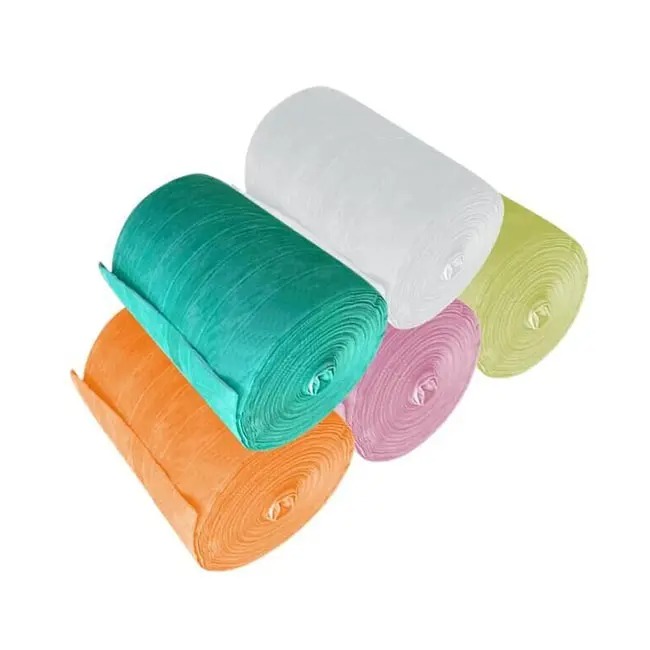
Fibrous filter media is the most widely used category in HVAC systems, industrial clean air units, and ventilation systems. Examples include Pocket Filter Media, pleated filters, fiberglass mats, polyester blends, and synthetic microfibers. These materials are engineered into layers of fibers that create a dense, porous structure capable of trapping particles through interception, diffusion, and inertial impaction.
Fibrous media stands out because of its optimized balance between filtration efficiency and airflow resistance. Fibers can be bonded, treated with electrostatic charges, or layered for progressive density, enabling them to capture both coarse and fine particles. Pocket Filter Media fits this category because its deep-pocket design uses fibrous layers to maximize dust-holding capacity and maintain stable airflow over long service cycles. In high-duty settings such as airports, hospitals, and large commercial buildings, fibrous media provides reliable performance without significantly increasing energy consumption.
HVAC systems using pocket filters, panel filters, or bag filters
Industrial dust collection units
Cleanrooms requiring mid-range to high-efficiency capture
Automotive air intake systems
Pre-filtration for membrane systems
The strength of fibrous media lies in its flexibility. It can be engineered for low-resistance airflow, long service life, or high dust-holding capacity depending on operational needs.
Granular filter media consists of small particles—such as activated carbon, sand, anthracite, or resin beads—packed into a column or layered bed. Unlike fibrous media, granular media functions not by trapping particulates in a physical mesh but through adsorption, chemical bonding, or gravity-driven filtration. This makes it indispensable in water treatment, chemical processing, and industrial gas purification.
Activated carbon, the most recognized granular medium, removes volatile organic compounds (VOCs), odors, fumes, and harmful gases through adsorption. Other granular media such as sand or gravel are frequently used in municipal water filtration due to their ability to trap suspended solids while allowing water to pass through freely.
Strong chemical adsorption capabilities
High service life when maintained properly
Suitable for removing gases, odors, chemicals, or dissolved contaminants
Supports deep-bed filtration in high-volume systems
Water treatment plants
Aquaculture and aquarium filters
Chemical processing facilities
HVAC odor removal modules (activated carbon beds)
Industrial gas purification
Though granular media serves a very different purpose than fibrous or membrane media, it remains one of the three foundational components of filtration technologies used worldwide.
Membrane filter media is engineered for extremely high filtration accuracy, making it the go-to choice for pharmaceuticals, microelectronics, laboratory sterilization, and advanced liquid processing. Its structure is radically different from fibrous or granular media: membranes are thin, uniform sheets with precisely controlled pore sizes, often at the microfiltration or ultrafiltration scale.
Membrane media rely on size exclusion, meaning particles larger than the pore size are physically blocked from passing through. This level of precision allows membranes to capture bacteria, viruses, and microscopic contaminants that other media cannot reliably remove.
High particle retention accuracy
Sterilizable and compatible with cleanroom environments
Consistent performance with predictable pore sizes
Ideal for high-purity applications
Pharmaceutical manufacturing and sterile filtration
Semiconductor fabrication
Advanced food and beverage processing
Medical respirators and surgical applications
Laboratory microfiltration
While membranes offer unparalleled accuracy, they also introduce higher pressure drops and require more stringent maintenance than fibrous or granular media. They are not typically used in HVAC systems, although certain hybrid filters integrate membrane layers to improve efficiency.
Pocket Filter Media is fundamentally a fibrous filter media, but its structure and performance characteristics allow it to bridge the gap between basic and high-performance filtration. By using progressive-density synthetic fibers, pocket filters provide significantly higher dust-holding capacity compared to flat-panel filters.
The “pocket” design creates deep channels that allow air to distribute evenly across the media surface, reducing pressure drop while increasing lifespan. These characteristics make Pocket Filter Media particularly effective in environments with high particulate loads or extended operation schedules. Because pocket filters can be engineered with various efficiency ratings (including MERV and EN779 equivalents), they serve as a versatile solution for commercial and industrial settings.
Pocket Filter Media also supports multi-layer constructions, enabling manufacturers to tailor performance for targeted particle sizes. This flexibility positions pocket filters as an advanced—but still cost-effective—subcategory within the broader fibrous media classification.
| Filter Media Type | Primary Mechanism | Typical Applications | Strengths | Limitations |
|---|---|---|---|---|
| Fibrous (incl. Pocket Filter Media) | Mechanical capture, electrostatic attraction | HVAC, dust collection, cleanrooms | Balanced efficiency, long lifespan, high airflow | Not suitable for chemical adsorption |
| Granular | Adsorption, gravity-based filtration | Water treatment, gas purification | Excellent for gases and dissolved contaminants | Higher flow resistance, requires regular regeneration |
| Membrane | Size exclusion | Pharmaceuticals, microelectronics | Precise particle retention | Higher cost, sensitive to clogging |
| Media Type | Airflow Resistance | Efficiency Range | Best for |
|---|---|---|---|
| Fibrous | Low to moderate | Medium to high | HVAC and general air purification |
| Granular | Moderate to high | Variable | Chemical filtration and odor control |
| Membrane | High | Very high | Sterile and precision environments |
Choosing the correct filter media requires evaluating factors such as particle size distribution, required airflow, budget constraints, environmental conditions, and compliance standards. For HVAC professionals, Pocket Filter Media is often the preferred solution due to its ideal balance of efficiency, durability, and cost control.
For chemical processing or odor control, granular media is typically more appropriate. Membranes are indispensable in applications requiring particle-level control, particularly when sterility or ultra-high purity is mandatory. By aligning media characteristics with operational demands, facilities can achieve optimal system performance without unnecessary energy expenditure or premature filter replacement.
Each type of filter media comes with its own maintenance requirements. Fibrous media, including Pocket Filter Media, should be inspected regularly for dust accumulation, pressure drop, and airflow consistency. Timely replacement ensures energy efficiency and prevents strain on HVAC motors.
Granular media often needs regeneration or periodic replacement depending on its adsorption capacity. Membrane media requires careful pre-filtration, controlled operating pressures, and routine cleaning cycles to prevent fouling. Effective maintenance not only extends filter life but also enhances system reliability and safety across all applications.
Understanding the three primary types of filter media—fibrous, granular, and membrane—provides a clear framework for selecting the right solution for any filtration challenge. Each category offers unique strengths and operational advantages. Among them, fibrous media, particularly Pocket Filter Media, delivers an exceptional combination of performance, longevity, and airflow optimization for HVAC and industrial air systems. By aligning media type with application needs, facilities can improve purification efficiency, reduce energy costs, and maintain a healthier operational environment.
1. What are the three types of filter media?
The three main types are fibrous, granular, and membrane filter media.
2. Is Pocket Filter Media considered fibrous media?
Yes. Pocket Filter Media is a form of high-efficiency fibrous media designed for deep-bed air filtration.
3. Which media is best for removing odors and gases?
Granular media, especially activated carbon, is most effective for adsorption-based removal.
4. Which filter media is used for sterile or precision environments?
Membrane filter media is the preferred choice for high-precision filtration.
5. How do I choose the right filter media?
Evaluate efficiency requirements, airflow constraints, particle sizes, cost targets, and environmental compliance standards.