English
- All
- Product Name
- Product Keyword
- Product Model
- Product Summary
- Product Description
- Multi Field Search
Views: 184 Author: Site Editor Publish Time: 2026-02-24 Origin: Site
Pocket Filter Media plays a central role in modern commercial and industrial air filtration systems, especially where large dust-holding capacity, stable airflow, and fine particle control are required. Its performance, structure, and material composition determine how efficiently HVAC systems maintain indoor air quality across diverse applications. One question often raised among engineers, filtration manufacturers, and facility managers is whether Pocket Filter Media qualifies as fibrous media. This distinction influences not only how the material behaves in airflow but also how it should be selected, tested, and maintained within air handling units. Understanding this relationship is essential for optimizing filter selection and predicting long-term performance.
Material Variations and Their Impact on Filtration Performance
Comparison: Pocket Filter Media vs. Other Fibrous Media Types
Practical Advantages of Fibrous Pocket Filter Media in HVAC Systems
How to Select the Right Pocket Filter Media Based on Fibrous Properties
Fibrous media is characterized by randomly or strategically arranged fibers that form a porous matrix capable of capturing particles as air passes through. The fibers can be synthetic, glass, natural, or composite materials, and the performance depends on fiber diameter, packing density, porosity, electrostatic charge, and structural stability. In air filtration engineering, fibrous media is considered the dominant form for high-volume particulate control because it balances airflow resistance with effective particle interception. The core functional principle lies in how fibers create tortuous pathways that trap particles through mechanisms such as diffusion, interception, and inertial impaction. Any media designed with these fiber-based properties and behaviors falls under the fibrous media category.
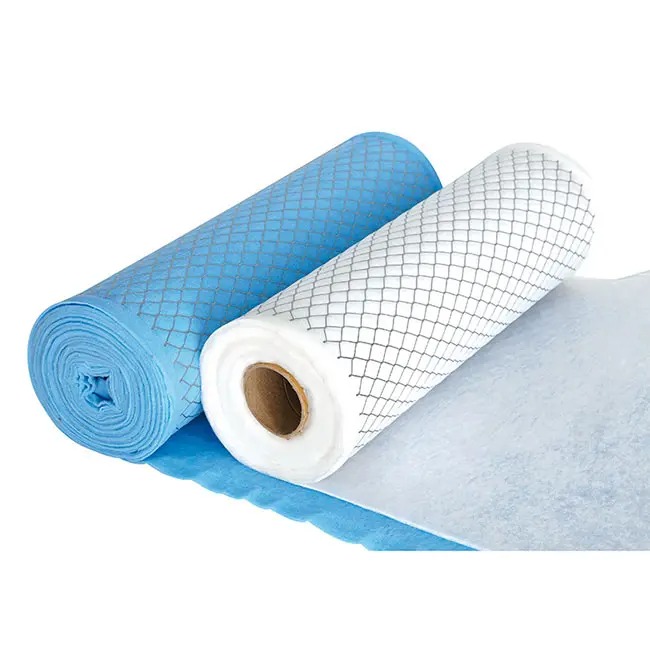
Pocket Filter Media is engineered with multi-layered structures arranged into flexible pockets that expand under airflow. These pockets significantly enlarge the available filtration surface area, enabling high dust-holding capacity without excessive pressure drop. The media structure typically consists of progressive-density fiber layers—coarser fibers upstream and finer fibers downstream—to optimize both particle capture and airflow uniformity. Additionally, the media is reinforced with supporting scrims or melt-blown layers to maintain mechanical rigidity and prevent fiber collapse. Because these structural layers consist of fiber-based materials arranged into a cohesive filtration matrix, the media behaves functionally and physically like classic fibrous filtration materials. The design demonstrates the essential attributes required for classification as fibrous media.
Pocket Filter Media is indeed considered fibrous media due to its composition of synthetic microfibers or glass fibers forming a porous network. The pockets use layers of fibers bonded thermally or mechanically to establish a deep-loading structure that relies on fiber-particle interactions. This classification is further supported by the filtration mechanisms typical of fibrous materials, including inertial deposition, interception, and diffusion capture. Even when treated with electrostatic charge to enhance performance, the underlying matrix remains fundamentally fiber-based. Moreover, international filtration standards such as ISO 16890 categorize such media by its fibrous structure and particulate filtration behavior. Therefore, Pocket Filter Media aligns fully with the scientific and engineering criteria for fibrous media classification.
Pocket Filter Media can be manufactured from several material types, each influencing filtration efficiency, resistance, and durability. The two most common categories include synthetic fibers—often polypropylene or polyester—and glass fibers, which provide higher efficiency at fine particle sizes. The differences in fiber diameter, thermal stability, and electrostatic properties define how the media responds to various air conditions. For example, synthetic Pocket Filter Media offers moisture resistance and low fiber shedding, while glass fiber media provides more consistent mechanical filtration for submicron particles. Material selection determines the filter’s overall lifespan, energy consumption, and compatibility with specific HVAC environments. Understanding these variations is crucial for selecting the right fibrous media for operational needs.
| Feature | Synthetic Fiber Pocket Media | Glass Fiber Pocket Media |
|---|---|---|
| Fiber Diameter | Medium to fine | Very fine |
| Filtration Type | Mechanical + electrostatic | Primarily mechanical |
| Moisture Resistance | High | Moderate |
| Typical Efficiency | ePM10–ePM1 | ePM2.5–ePM1 |
| Temperature Tolerance | Moderate | High |
| Fiber Shedding | Low | Medium |
The efficiency of Pocket Filter Media arises from classical fibrous media capture mechanisms. These include inertial impaction, which captures larger particles unable to follow the air stream around the fibers, and interception, where particles following the airstream reach within one radius of a fiber and adhere to it. Additionally, finer particles are removed via diffusion when their Brownian motion increases the likelihood of contact with fiber surfaces. Some Pocket Filter Media types incorporate electrostatic charge to enhance these mechanisms by attracting airborne particles even when airflow speeds remain low. The multi-layer design further supports depth loading, meaning dust is captured throughout the media thickness rather than on the surface alone, extending service life while maintaining consistent pressure drop.
Pocket Filter Media is only one form of fibrous filtration material, and contrasting it with other media types highlights its strengths. Panel filters, HEPA filters, and pleated filters also use fibrous constructions but differ in structure, density, and intended airflow volumes. For example, HEPA media uses ultra-fine fibers for near-absolute particulate capture but is unsuitable for high-volume industrial airflow. In contrast, Pocket Filter Media balances efficiency and airflow, making it ideal for large HVAC systems where higher dust-holding capacity is necessary. Compared to pleated filters, pocket filters offer greater surface area and lower frequency of replacements. Understanding these differences underscores why Pocket Filter Media remains one of the most practical fibrous media solutions for commercial air handling units.
| Media Type | Fibrous? | Main Advantage | Common Use |
|---|---|---|---|
| Pocket Filter Media | Yes | High dust-holding capacity | Commercial HVAC |
| Pleated Filter Media | Yes | Low initial pressure drop | Residential systems |
| HEPA Filter Media | Yes | Ultra-fine capture | Cleanrooms |
| Panel Filter Media | Yes | Cost-effective prefiltration | Industrial pre-filters |
Fibrous Pocket Filter Media offers several operational advantages critical for maintaining air system performance in demanding environments. Its deep-loading structure allows it to retain large volumes of dust without rapidly increasing resistance, reducing the frequency of replacements. The pocket design ensures stable airflow distribution, preventing turbulence and improving overall system energy efficiency. Fibrous layers also provide versatility for capturing a wide spectrum of particle sizes, including fine dust, pollen, and industrial contaminants. Furthermore, the mechanical strength of the media ensures that pockets maintain shape even under fluctuating airflow or high humidity, making them a reliable choice for hospitals, data centers, manufacturing facilities, and office buildings.
Selecting the optimal Pocket Filter Media requires evaluating several fibrous characteristics, including fiber density, compatibility with humidity, efficiency class under ISO 16890, and expected dust-holding capacity. Systems requiring fine particle filtration, such as clean zones or medical facilities, benefit from glass fiber or fine synthetic media capable of ePM1 performance. For humid or variable environments, synthetic fibers provide superior mechanical stability. It is also essential to match the fibrous media to system airflow rates, ensuring that the physical structure of the pockets supports uniform air distribution. Choosing the right media based on its fibrous properties ensures longevity, energy efficiency, and reliable filtration results across diverse HVAC applications.
Pocket Filter Media is unequivocally considered fibrous media due to its fiber-based construction, filtration behavior, and reliance on classical particle capture mechanisms. Its layered structure, engineered fiber networks, and deep-loading capabilities align perfectly with the defining characteristics of fibrous media used in professional air filtration. Understanding this classification helps facility managers, HVAC designers, and filtration engineers make informed decisions when selecting filters that meet performance, efficiency, and operational demands. As one of the most versatile fibrous media types available, Pocket Filter Media remains an essential component of modern indoor air quality control.
1. Is Pocket Filter Media always made of synthetic fibers?
Not necessarily. While synthetic polypropylene or polyester fibers are common, some high-efficiency versions use glass fiber layers for improved fine-particle capture.
2. What makes Pocket Filter Media different from pleated filters?
Pocket filters offer significantly larger surface area due to their extended pocket design, providing higher dust-holding capacity and longer service life.
3. Does Pocket Filter Media rely on electrostatic charge?
Some types do, particularly synthetic variants, but the primary filtration mechanisms remain mechanical due to the fibrous matrix.
4. Are all Pocket Filter Media types compliant with ISO 16890?
Most modern products are tested and rated according to ISO 16890, but compliance depends on the manufacturer and product specifications.
5. How long does Pocket Filter Media typically last?
Service life varies by application, but fibrous pocket filters generally last longer than pleated filters due to deep-loading characteristics and larger media volume.