English

- All
- Product Name
- Product Keyword
- Product Model
- Product Summary
- Product Description
- Multi Field Search
Views: 0 Author: Site Editor Publish Time: 2026-11-15 Origin: Site
Unboxing fresh furniture often floods a room with a sharp, synthetic scent that many people associate with newness. However, you are actually breathing an invisible chemical cocktail known as Volatile Organic Compounds or VOCs. Standard HEPA media capture physical particulate matter like dust and pollen exceptionally well, yet they remain fundamentally powerless against gaseous pollutants. The proven engineering solution for neutralizing these airborne chemicals is an Activated Carbon Air Filter. Understanding the sophisticated science behind this filtration technology allows you to move beyond basic air circulation and actively scrub your indoor atmosphere.
Volatile Organic Compounds are chemicals possessing a high vapor pressure at room temperature. This specific physical property allows them to transition effortlessly from a solid or liquid state directly into a gas. Consequently, they linger indefinitely in the air supply. Common household items like pressed-wood cabinetry, fresh paint, aggressive cleaning agents, and scented candles constantly emit compounds such as benzene, formaldehyde, and acetone. When these chemicals infiltrate enclosed spaces, they create both immediate and long-term health hazards. Symptoms can range from acute headaches and dizziness to chronic respiratory distress and severe organ damage.
To effectively eliminate these gaseous threats, we must distinguish between two similar-sounding but physically distinct processes. Many consumers mistakenly assume a filter acts like a sponge, soaking up chemicals into its core. This is a fundamental misconception in air purification mechanics. In reality, chemical filtration relies on Adsorption, which is strictly a surface-based phenomenon. Think of it as a molecular-level magnet. The pollutant molecules do not permeate the carbon structure. Instead, they are drawn to the surface via intermolecular attractions known as Van der Waals forces. Once attracted, the molecules are bound and held securely in place along the exterior of the carbon pores.
| Process Type | Mechanism | Filtration Analogy | Application in Air Purifiers |
|---|---|---|---|
| Adsorption | Molecules adhere to the surface of the material via chemical or physical bonds. | A magnet attracting iron filings to its exterior. | Activated carbon capturing gaseous VOCs and odors. |
| Absorption | Substances permeate and are dissolved into the entire volume of the material. | A sponge soaking up spilled water into its core. | Not typically used for standard dry air filtration systems. |
Raw charcoal is essentially inert. To transform it into a high-performance filtration medium, the base material must undergo a rigorous thermal activation process. Manufacturers superheat carbonaceous materials under extreme atmospheric conditions. This precise thermal treatment effectively bores billions of microscopic tunnels into the substrate. This complex Pore Structure dictates the overall efficiency of the unit.
Currently, the global filtration industry is experiencing a massive shift toward denser, coconut-shell-derived carbon. Field data from commercial HVAC applications indicates that coconut shell carbon offers superior micropore distribution compared to traditional coal-based alternatives. Because these optimized pores create an internal surface area that can exceed the size of a tennis court in just a few grams of material, the medium provides an astronomical number of docking stations for gaseous pollutants to attach themselves permanently.
Modern building managers often equate high fan speeds with superior air quality. In the realm of chemical filtration, higher velocity is rarely beneficial. The physics of chemical bonding relies heavily on a critical engineering metric called Residence Time. This defines the exact duration the contaminated air remains in contact with the carbon bed as it moves through the system.
If the airflow velocity is too rapid, the chemical bonding process fails to complete. The pollutants simply glide past the carbon granules and re-enter the room. Leading engineers now design deep-bed systems that force air through a winding, high-resistance path. This natural braking effect ensures the molecules have the split-second contact required to adhere to the media.
The consumer market is saturated with aesthetic charcoal bags designed to be placed in closets or room corners. While these utilize similar base materials, they function strictly as passive tools. Without a motorized impeller to cycle the environmental air actively, these bags only treat stagnant pockets in their immediate vicinity.
Furthermore, effective remediation demands an active mechanical system. A motorized unit pulls polluted air from distant zones and forces it through dense filtration media under pressure. Relying on passive diffusion is akin to expecting a bucket of water to spontaneously clean a dirty floor. It simply lacks the mechanical driving force required to circulate and scrub the entire volume of a room.
Proper maintenance and correct component selection form the cornerstone of effective indoor air quality management. The most frequent cause of premature failure in chemical filters is physical blinding. This occurs when fine ambient dust coats the carbon granules and seals off their microscopic pores.
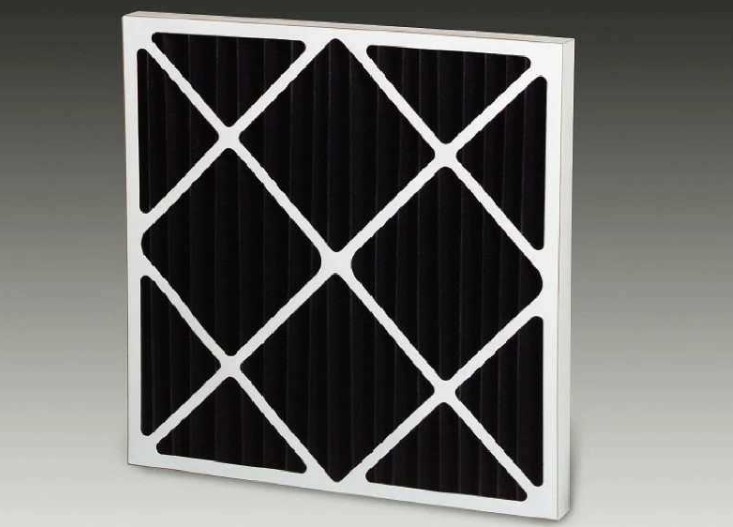
To prevent this, industrial and high-end residential setups utilize multi-stage configurations. For instance, integrating a G4 Cardboard Pleated Carbon Pre-Filter captures larger particulate matter while simultaneously initiating initial odor control. This vital step preserves the primary dense carbon bed for its intended purpose of heavy gas capture. When sourcing replacements, avoid the thin, lightweight sheets often found in budget purifiers. They lack the physical mass necessary for sustained VOC Removal. Instead, prioritize thick, granular beds or chemically impregnated variants designed to neutralize stubborn molecules like formaldehyde on contact. By choosing a filter with significant carbon weight, you invest in a higher-capacity system capable of handling everything from wildfire smoke to post-renovation off-gassing.
No, standard carbon filters are not equipped to capture carbon monoxide. This particular gas is far too small and chemically distinct to be captured by surface adsorption. For carbon monoxide safety, you should always rely on dedicated electronic detectors and ensure proper mechanical ventilation in the building.
While the carbon bed might trap larger biological debris by chance, it is not a primary tool for pathogen removal. A high-efficiency HEPA filter remains the gold standard for trapping microscopic viruses and bacteria. The carbon layer should remain focused strictly on gas-phase chemicals and odors.
Yes, this phenomenon is known as desorption. If a filter becomes fully saturated and the room experiences a sudden shift in temperature or humidity, the weak chemical bonds holding the trapped gases can break. This leads to the release of concentrated pollutants. Strictly adhering to recommended filter replacement cycles is essential to prevent this hazard.
The operational lifespan depends entirely on the total weight of carbon in the unit and the pollutant load of your specific environment. Thin carbon pads may saturate within a few weeks. In contrast, heavy-duty granular filters containing multiple pounds of media can provide effective protection for six to twelve months before requiring replacement.
In the context of commercial air filtration, there is no meaningful difference. Both terms refer to carbonaceous materials that have undergone the exact same high-temperature activation process to maximize their surface area. Industry manufacturers use these terms interchangeably to describe the same effective filtration medium.
Activated carbon is not designed for particulate filtration. While the physical structure of a carbon bed might inadvertently catch some large dust particles, doing so actually degrades the filter's performance by clogging the micropores. This is why a dedicated particulate pre-filter must always be installed upstream of the carbon media.
No, you cannot wash a saturated carbon filter to restore its chemical trapping capabilities. Water will only fill the microscopic pores and potentially degrade the structural integrity of the filter housing. Once the adsorption sites are filled with chemical pollutants, the entire carbon module must be physically replaced.
Investing in the right air purification components is non-negotiable for maintaining a safe, breathable environment. Whether you are dealing with aggressive post-renovation off-gassing or routine commercial emissions, selecting a precision-engineered solution makes all the difference. Explore the comprehensive range of professional-grade air filtration systems at Vitefilter to find the exact configuration tailored for your specific environmental control needs.