English
- All
- Product Name
- Product Keyword
- Product Model
- Product Summary
- Product Description
- Multi Field Search
Views: 0 Author: Site Editor Publish Time: 2026-02-24 Origin: Site
Hospital cleanrooms are among the most critical controlled environments in modern healthcare facilities. They are designed to minimize airborne contamination, protect vulnerable patients, and ensure sterile conditions for medical procedures and pharmaceutical preparation. At the center of these environments is one essential component: the HEPA filter.
A HEPA filter is not just another air filter. In hospital cleanrooms, it serves as the final barrier against microscopic airborne particles, including bacteria, dust, and other contaminants that could compromise patient safety. From operating rooms to isolation wards and sterile compounding pharmacies, HEPA filtration systems are carefully engineered to maintain strict indoor air quality standards.
This article explores how HEPA filters are used in hospital cleanrooms, their function within HVAC systems, installation methods, performance standards, maintenance requirements, and why they are indispensable in healthcare environments.
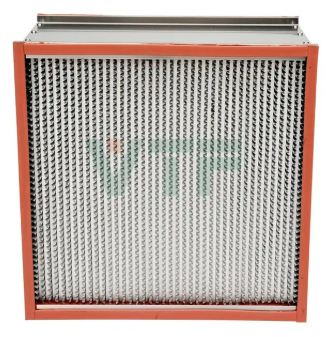
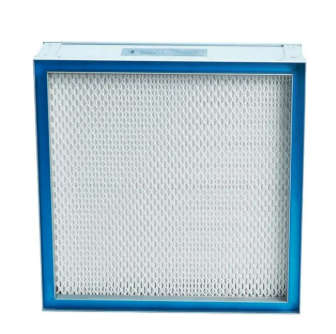
Hospital cleanrooms require controlled levels of airborne particles, pressure differentials, temperature, and humidity. Among these control factors, air cleanliness is one of the most critical. This is where the HEPA filter plays a central role.
HEPA filters are designed to capture at least 99.97% of particles as small as 0.3 microns. In hospital cleanrooms, this level of filtration is necessary to prevent contamination during surgical procedures, protect immunocompromised patients, and maintain sterile preparation areas.
Unlike standard air filter solutions used in commercial buildings, HEPA filters in hospitals are installed at the terminal stage of the ventilation system. This means that after air passes through pre-filters and medium-efficiency filters, it finally moves through the HEPA filter before entering the cleanroom space.
This multi-stage filtration system ensures:
Extended HEPA filter lifespan
Reduced system pressure drop
Improved overall air cleanliness
Lower risk of microbial contamination
Without HEPA filtration, hospital cleanrooms would not be able to meet strict international healthcare standards.
HEPA filters are not limited to one area of a hospital. They are used across multiple departments where clean air is essential.
Operating rooms require extremely low particle concentrations. During surgery, airborne contaminants can cause surgical site infections. HEPA filters are installed in ceiling-mounted terminal units to supply laminar airflow directly over the surgical table.
This vertical unidirectional airflow system:
Pushes contaminants away from the surgical field
Maintains positive pressure
Reduces the risk of cross-contamination
In many modern operating rooms, HEPA-filtered air is delivered through laminar flow ceilings to create a protective clean zone.
Isolation rooms are designed to control infectious diseases. Depending on the purpose, they can be:
Positive pressure rooms (protecting patients)
Negative pressure rooms (protecting staff and other patients)
HEPA filters are used in exhaust systems of negative pressure rooms to ensure contaminated air is properly filtered before being discharged outside the building.
Hospital pharmacies that prepare sterile drugs require ISO-classified cleanrooms. HEPA filters are used in:
Clean benches
Laminar airflow cabinets
Compounding rooms
These systems protect both patients and pharmacy staff by maintaining sterile conditions.
Patients in ICUs often have weakened immune systems. HEPA filtration helps reduce airborne pathogens, improving indoor air quality and supporting recovery.
Understanding how a HEPA filter works within a hospital HVAC system helps clarify its importance.
A typical hospital air filtration system includes several stages:
Pre-filter (coarse filtration)
Medium-efficiency filter (such as bag filters)
Terminal HEPA filter
The pre-filter captures large dust particles and extends the life of downstream filters. The medium-efficiency air filter removes smaller particles. Finally, the HEPA filter captures microscopic contaminants that previous stages could not remove.
This staged approach improves system efficiency and reduces maintenance frequency.
HEPA filters use multiple physical mechanisms to capture particles:
Interception
Impaction
Diffusion
The filter media, usually made of fine glass fiber, forms a dense mat that traps particles without excessively restricting airflow.
Hospital applications typically use two main types of HEPA filter designs.
Mini pleat HEPA filters use closely spaced pleats to increase surface area while maintaining compact dimensions. These filters are often used in:
Ceiling grid systems
Laminar airflow ceilings
HEPA boxes
They offer:
High filtration efficiency
Lower resistance
Compact installation
Compact HEPA filters have a deeper frame and higher dust holding capacity. They are commonly used in central HVAC systems where space allows for larger units.
Depending on hospital requirements, HEPA filters may use frames made from:
Plastic
Wood
Metal
The choice depends on fire resistance, durability, and environmental conditions.
The most common media used in hospital HEPA filters is glass fiber. Glass fiber provides:
Stable structure
High filtration efficiency
Consistent airflow performance
Hospital cleanrooms are classified according to international standards such as ISO 14644. Different classifications require different air cleanliness levels.
For example:
ISO Class 5 environments require extremely low particle counts
ISO Class 7 or 8 areas have slightly less stringent requirements
HEPA filters are essential in achieving ISO 5 and ISO 6 cleanroom standards, particularly in operating theaters and sterile drug preparation rooms.
Air changes per hour (ACH) also play an important role. Hospital cleanrooms often require:
20–30 air changes per hour or more
HEPA filters must be capable of maintaining airflow performance while meeting these ventilation rates.
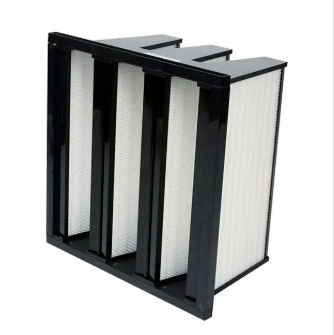
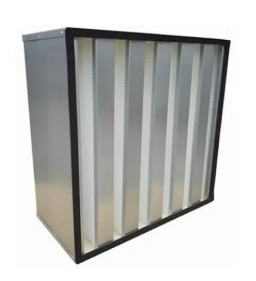
Correct installation is critical to HEPA filter performance.
In many hospital cleanrooms, HEPA filters are installed at the ceiling level. This ensures that filtered air directly enters the clean zone.
Proper sealing prevents air leakage. Common sealing methods include:
Gel seal systems
Gasket sealing
Knife-edge frames
Even small leaks can compromise cleanroom performance.
After installation, HEPA filters undergo integrity testing, often using aerosol challenge tests. This ensures:
No bypass leakage
Proper sealing
Verified filtration efficiency
Regular testing is required to maintain compliance with healthcare regulations.
HEPA filters in hospital cleanrooms must be regularly monitored and maintained.
As particles accumulate, resistance increases. Monitoring differential pressure helps determine when replacement is needed.
Although HEPA filters have long service lives, hospitals often follow strict maintenance schedules to avoid performance decline.
Routine inspection ensures:
No frame damage
No seal deterioration
No airflow imbalance
Proper maintenance ensures continuous cleanroom performance.
The use of HEPA filters provides multiple advantages:
Reduced infection risk
Improved patient safety
Compliance with health regulations
Stable indoor air quality
Protection for medical staff
Without HEPA filtration, maintaining sterile medical environments would be extremely difficult.
While many types of air filter systems exist, not all provide the same level of performance.
Pre-filters remove coarse particles
Bag filters capture medium-sized particles
HEPA filters remove microscopic contaminants
In hospital cleanrooms, only HEPA filtration can meet strict particle control standards.
Healthcare facilities continue to evolve. Modern hospital cleanroom systems now focus on:
Energy-efficient airflow design
Low resistance HEPA filters
Smart monitoring systems
Sustainable filter materials
Improving energy efficiency while maintaining high filtration standards is a key industry trend.
HEPA filters are a fundamental component of hospital cleanrooms. They provide the high-efficiency air filtration required to maintain sterile environments, protect patients, and ensure compliance with international health standards.
From operating rooms and isolation wards to sterile pharmaceutical preparation areas, HEPA filters serve as the final and most critical air filter stage in hospital HVAC systems.
By combining multi-stage filtration, proper installation, routine maintenance, and compliance testing, hospitals can ensure safe, clean air environments that support modern healthcare operations.
In hospital cleanrooms, the HEPA filter is not just part of the ventilation system—it is a vital safeguard for patient health and medical safety.