
- All
- Product Name
- Product Keyword
- Product Model
- Product Summary
- Product Description
- Multi Field Search
 English
 Views: 0 Author: Site Editor Publish Time: 2026-06-26 Origin: Site


Pre-filtration protects expensive final filters from premature failure. However, selecting the wrong material often introduces restrictive pressure drops. These restrictions strain blower motors and dramatically spike energy consumption. Facilities simply cannot afford these operational inefficiencies. Many technicians naturally express skepticism about pre-filters restricting airflow. We must address this concern directly and clearly. System stability relies entirely on the structural and aerodynamic properties of your chosen material. If you install restrictive materials, baseline airflow suffers immediately. This guide serves as an evaluation framework for facility managers and engineers. You will learn to specify the correct HVAC filter media for your exact application. We will show you how to balance optimal particle capture against long-term operational equilibrium. You will discover practical ways to protect your equipment while maintaining smooth, predictable airflow dynamics.
The primary role of pre-filtration media is to maximize Dust Holding Capacity (DHC) while maintaining a low and predictable pressure drop.
Synthetic and fiberglass media offer distinct trade-offs regarding moisture resistance, mechanical efficiency, and overall lifecycle value.
Evaluating media requires looking beyond standard MERV ratings to include implementation realities like structural integrity under variable air volume (VAV) conditions.
Procurement specifications must align with established testing standards (ASHRAE 52.2 / ISO 16890) to ensure compliance and verifiable performance.
Unstable pre-filtration creates cascading failures throughout air handling systems. Media collapse and rapid blinding pose significant operational threats to any facility. When pre-filters blind prematurely, they suffocate the fundamental airflow. This suffocation forces downstream components to overcompensate rapidly. Final HEPA filters bear the brunt of this instability. They load prematurely and require unscheduled replacement interventions. Maintenance teams face unexpected downtime. Static pressure spikes across the entire air handler unit.
You must consider the energy factor carefully. Airflow resistance dictates fan energy consumption directly and forcefully. Blower motors must ramp up their RPM to maintain required air changes. This mechanical strain consumes massive amounts of electricity. Fan energy accounts for the vast majority of lifecycle expenses. Material selection directly controls this specific operational variable. Choosing structurally sound materials mitigates these costly energy penalties.
What defines a successful pre-filtration strategy? We evaluate deployment success across three primary criteria:
Extended maintenance intervals: Filters must hold heavy dust loads without choking system airflow prematurely.
Protected downstream coils: The material must capture coarse particulates reliably to prevent coil fouling.
Flat-line energy expenditure: Fan motors should experience predictable, stable static pressure throughout the service cycle.
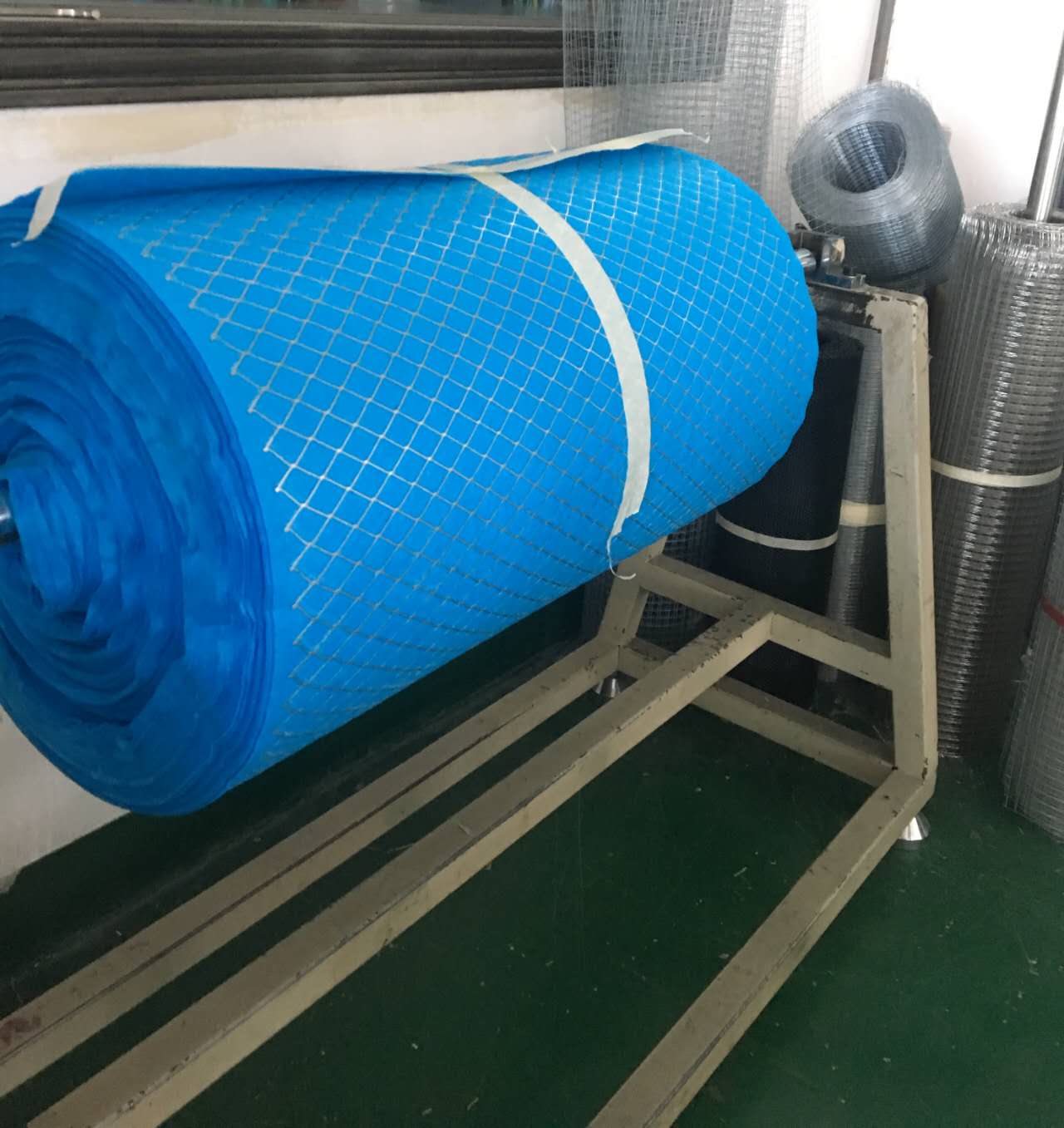
Understanding material characteristics remains crucial for system design. Different environments demand different structural and filtration properties. You must match the material to your specific environmental challenges.
Synthetic options provide exceptionally high moisture resistance. They feature strong mechanical durability under physical stress. Manufacturers often apply specialized electret charges during production. This electrostatic boost increases initial capture efficiency significantly. Environments experiencing fluctuating humidity benefit greatly from synthetic materials. Synthetics perform exceptionally well when you need high initial MERV ratings. They accomplish this impressive capture efficiency without requiring thick material beds.
These materials rely entirely on pure mechanical filtration principles. They deliver a highly consistent pressure drop over extended time periods. Charge degradation does not affect fiberglass performance whatsoever. Heavy particulate environments require these predictable, long-term lifecycles. Structural rigidity matters more here than initial efficiency spikes. Fiberglass delivers this consistent rigidity under heavy dust loading. It excels in harsh, dry industrial applications.
Blended materials utilize a strategic structural gradient. They combine coarse outer layers with much denser inner layers. The outer layers catch large, abrasive debris easily. Inner layers then capture fine dust particles efficiently. High-dust commercial applications demand maximum Dust Holding Capacity. Blended options maximize this capacity before requiring manual changeouts. They prevent premature face-loading effectively.
Table 1: Material Characteristics Comparison | |||
Material Type | Moisture Resistance | Efficiency Mechanism | Ideal Application Environment |
|---|---|---|---|
Synthetic | High | Mechanical + Electrostatic | Fluctuating humidity, high initial MERV needs |
Fiberglass | Low to Moderate | Pure Mechanical | Heavy dry particulate, rigid structural needs |
Blended / Multi-Layer | Moderate | Gradient Mechanical | High-dust commercial, maximum DHC demands |
Decision-makers often focus on the wrong performance metrics. You must evaluate materials across multiple interconnected dimensions.
Manufacturer data sheets often highlight impressively low initial pressure drops. This initial metric means little if the material blinds rapidly. Blinding occurs when captured particles quickly seal the material surface. Airflow stops abruptly once the surface seals. You must evaluate the final pressure drop ratings carefully. True performance reveals itself only at the end of the service cycle.
Dust Holding Capacity measures sheer mass retention capabilities. The material must hold substantial mass without suffocating the system. Coarse particles fill material voids differently than fine particles. High DHC values ensure longer service intervals. You must align DHC expectations with your actual facility particulate profile.
Electret-charged Air Filter Media loses efficiency over time predictably. The electrostatic charge dissipates as particles coat the sensitive fibers. Industry standards recognize this inevitable physical reality. You must evaluate the true mechanical efficiency baseline. Appendix J of the ASHRAE 52.2 standard provides this critical discharging test data. It reveals how the material performs after the charge neutralizes.
Procurement conversations must move away from simple unit-cost analysis. You need a comprehensive formula incorporating maintenance labor and disposal frequency. Fan energy draw remains the largest and most volatile variable. A cheap filter forcing high energy draw wastes operational resources rapidly. Smart lifecycle modeling focuses on lowering systemic resistance. It prioritizes energy conservation over initial purchase savings.
Chart 1: Performance Profile (Pressure Drop vs. Time) | ||
Time in Service (Months) | Material A (Rapid Blinding) | Material B (Stable Gradient) |
|---|---|---|
Month 1 | 0.25 in. w.g. | 0.30 in. w.g. |
Month 2 | 0.45 in. w.g. | 0.35 in. w.g. |
Month 3 | 0.85 in. w.g. (Failure) | 0.40 in. w.g. |
Month 4 | Replaced | 0.48 in. w.g. |
Implementation realities dictate overall system performance. The material remains only as good as its structural deployment. Airflow velocity impacts the physical material directly and constantly. High velocities can tear weak materials apart.
Pleating geometry increases the overall active surface area. This brilliant geometry lowers air velocity traversing the material itself. Lower face velocity improves particle capture efficiency. However, physical risks certainly exist. Pleat bunching occurs frequently in high-moisture environments. High-velocity airflows can collapse unsupported pleats completely. You must ensure proper wire backing supports the pleat structure. Proper backing prevents catastrophic collapse under heavy loads.
Advantage: Maximizes surface area within limited spatial footprints.
Advantage: Reduces pressure drop through velocity distribution.
Risk: Potential pleat collapse without robust structural reinforcement.
Pocket designs provide incredibly deep loading capabilities. They hold massive amounts of particulate efficiently. Their extended surface area manages heavy dust environments effortlessly. The primary risk involves material fluttering. Variable air volume (VAV) systems constantly change air speeds. Sagging or fluttering releases captured dust downstream. It can also cause severe material tearing at the seams. You must select rigid materials designed specifically for VAV fluctuations.
Advantage: Exceptional dust holding capacity for commercial spaces.
Advantage: Fewer changeouts required annually.
Risk: Material fatigue and shedding in aggressive VAV applications.
Regulatory compliance protects facilities from liability and failure. You must specify materials based on recognized industry frameworks.
Specifying MERV 8 to MERV 11 parameters requires careful balance. Over-specifying causes unnecessary system drag. You want just enough efficiency to protect downstream components. Too much efficiency restricts vital airflow. Engineers must consult ASHRAE 52.2 data sheets. They should verify particle capture across all three size ranges. This ensures the specification matches the actual environmental threat.
Global filtration standards are shifting definitively. The ISO 16890 standard uses ePM10 and ePM2.5 metrics now. This aligns filtration testing closer to real-world atmospheric particulate sizes. It provides a much clearer picture of actual particulate capture. ISO 16890 evaluates materials based on specific mass efficiency. This allows engineers to target dangerous particulate matter more accurately. Procurement teams should familiarize themselves with these newer metrics.
Audit-ready procurement requires strict adherence to mandatory baselines. Flame retardancy standards like UL 900 remain absolutely non-negotiable. Fire codes demand certified materials in commercial ductwork. Moisture resistance minimums prevent catastrophic system failures in humid climates. Always verify independent compliance certificates before authorizing deployment. Do not rely solely on internal manufacturer claims. Demand third-party testing validation.
Optimal material selection solves a fundamental engineering tension. You must balance protecting downstream components against maintaining energy-efficient airflow. Ignoring either side of this equation causes operational disruption. A methodical shortlisting logic prevents costly deployment mistakes. We strongly recommend auditing your current pressure drops first. You should check historical maintenance logs thoroughly before trialing new options. Let data drive your specification decisions. Request physical samples to test structural rigidity directly. Consult with an application engineer to perform a comprehensive site audit. Taking these deliberate steps ensures your pre-filtration strategy enhances system stability.
A: Technicians often encounter systems freezing up or blowing motors. Standard blowers cannot always handle the static pressure drop of dense materials. The solution requires specifying materials specifically designed for low airflow resistance. You should not simply downgrade the overall MERV rating. Proper material selection balances capture efficiency with necessary airflow.
A: Synthetics generally resist moisture absorption entirely. This prevents structural expansion and sudden pressure drops. Fiberglass maintains its basic structure well under normal conditions. However, fiberglass can shed fibers if subjected to severe, prolonged saturation. Synthetics usually offer superior stability in high-humidity applications.
A: You should avoid blanket "every three months" rules completely. Monitor the final pressure drop via a manometer instead. Changeouts should occur when resistance reaches the manufacturer’s recommended terminal limit. This data-driven practice balances material replacement intervals against ongoing energy penalties.