English
- All
- Product Name
- Product Keyword
- Product Model
- Product Summary
- Product Description
- Multi Field Search
Views: 0 Author: Site Editor Publish Time: 2026-02-26 Origin: Site
In any laboratory environment, whether it is used for scientific research, drug development, or chemical analysis, maintaining clean, contaminant-free air is crucial. The quality of the air directly impacts the accuracy of experimental results, the safety of personnel, and the integrity of sensitive materials and equipment. In this context, HEPA filters (High-Efficiency Particulate Air filters) play an indispensable role.
HEPA filters are engineered to capture at least 99.97% of airborne particles that are 0.3 microns or larger. This level of filtration is essential in environments where even the smallest particle can compromise research outcomes or contaminate the products being developed. For laboratories, clean air is not just a luxury; it is a necessity for maintaining the integrity of experiments, protecting sensitive equipment, and safeguarding the health of personnel.
This article explores the significant role HEPA filters play in maintaining clean air in laboratory settings, how they function, their applications, and why they are vital to ensuring safe, precise, and productive laboratory environments.
Laboratories often deal with delicate experiments, hazardous substances, and highly sensitive materials. The importance of clean air cannot be overstated in such environments. The presence of airborne contaminants—whether dust, mold, bacteria, viruses, or even chemical particles—can lead to inaccurate results, product contamination, or hazardous exposure to laboratory personnel.
For instance, in a biological laboratory, contaminants such as bacteria and viruses can lead to cross-contamination between cultures, skewing research findings and potentially rendering entire experiments useless. In pharmaceutical and chemical labs, dust or particulate contamination can alter chemical reactions or the purity of substances being analyzed or manufactured. This makes it essential to have high-efficiency filtration systems that remove particulate matter from the air, and HEPA filters serve as the final line of defense in this process.
The contamination risks are not limited to biological hazards. Fine dust particles can settle onto equipment, leading to corrosion or malfunction. Sensitive instruments such as microscopes, spectrometers, and chromatography machines can suffer from particle-induced damage, affecting their precision and lifespan. Furthermore, these particles can interfere with accurate measurements and lab results, leading to costly delays and mistakes.
Moreover, maintaining clean air is crucial for protecting laboratory personnel. Exposure to harmful airborne particles, especially in labs dealing with hazardous chemicals, infectious agents, or biohazards, can result in respiratory problems, allergic reactions, or more severe health risks. HEPA filters are a reliable and effective way to reduce these risks by ensuring that the air remains free from harmful contaminants.
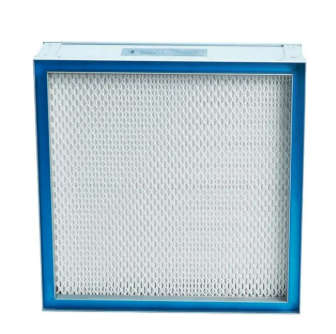
HEPA filters are engineered to capture a wide range of particles through three main mechanisms: interception, impaction, and diffusion.
This occurs when a particle comes into contact with a fiber in the filter media and adheres to it. This mechanism is effective for capturing larger particles that are too heavy to stay in the air.
When particles are too large or too heavy to follow the airflow, they collide with the fibers and are trapped. This mechanism works well for larger particles like dust, pollen, or dander.
This is the process by which very small particles (typically under 0.1 microns) move erratically due to collisions with air molecules. The erratic movement increases the likelihood that these particles will collide with the filter fibers, where they are then captured.
HEPA filters typically consist of glass fiber media arranged in a pleated pattern. The pleats increase the surface area of the filter, allowing it to capture more particles while maintaining a relatively low resistance to airflow. As air passes through the filter, particles become trapped, and the clean air moves on to the next stage in the ventilation system.
In laboratory settings, HEPA filters are usually placed at the terminal point of an air handling system to ensure the air entering the controlled environment is free from contaminants. By the time air reaches the HEPA filter, it has already passed through pre-filters and medium-efficiency filters, which capture larger particles. The HEPA filter then serves as the final barrier to remove any remaining microscopic contaminants before the air enters the laboratory.
HEPA filters are used in a wide range of laboratory environments, each with its unique air quality requirements. Here are several key areas where HEPA filtration is essential:
Biological laboratories work with microorganisms, viruses, and bacteria that require precise containment to prevent contamination. HEPA filters are used in biological safety cabinets, fume hoods, and lab ventilation systems to ensure that airborne pathogens are removed from the environment, providing a safe working area for scientists. In this setting, HEPA filters prevent harmful bioaerosols from escaping into the laboratory, protecting both the research and the personnel.
Chemical and pharmaceutical laboratories often work with volatile compounds, sensitive chemicals, and substances that require stringent purity standards. Airborne particles or impurities can alter the chemical structure of compounds, leading to erroneous results or contaminated products. HEPA filters are crucial in these settings to ensure clean air that meets the required purity standards. They also play a role in preventing cross-contamination between different substances being handled in the same space.
Cleanrooms are controlled environments that require strict air quality standards to minimize particle contamination. HEPA filters are essential in these areas to maintain the necessary air cleanliness levels, especially in settings like pharmaceutical manufacturing, microelectronics production, or aerospace research. In these environments, air filtration systems typically incorporate HEPA filters to achieve specific ISO Class ratings, such as ISO Class 5, which requires the removal of almost all particles larger than 0.3 microns.
For research purposes, clean air is essential to ensure that experiments are conducted in the most controlled conditions possible. Any airborne contaminants could interfere with delicate research processes, leading to inaccurate or unreliable results. HEPA filters provide the necessary protection by removing even the finest particles, ensuring that the environment remains sterile and suitable for precise experimentation.
In forensic laboratories, the integrity of evidence is paramount. HEPA filters prevent airborne particles, such as fibers or dust, from contaminating the evidence being analyzed. By keeping the air clean and free from particulate matter, HEPA filters help maintain the chain of custody and prevent the introduction of potential contaminants that could compromise evidence integrity.
Different types of HEPA filters are available to suit the varying needs of laboratory environments. The selection of the right filter type is based on factors such as airflow volume, space constraints, and specific laboratory requirements. Some common HEPA filter types include:
Mini pleat HEPA filters are designed with tightly packed pleats that provide a larger surface area in a compact form. These filters are ideal for laboratory environments where space is limited but high filtration efficiency is still required. Mini pleat filters are often used in smaller lab spaces and provide an effective solution for environments requiring precise control over airborne particles.
Compact HEPA filters are typically used in systems where space constraints are more significant, and higher airflow is needed. These filters are generally larger than mini pleat filters but maintain the same high efficiency. They are commonly used in larger research labs, cleanrooms, or HVAC systems with high ventilation demands.
Box-type HEPA filters are larger, with a deep, durable frame and are often used in industrial-scale applications. In laboratories, they are commonly found in larger air handling units (AHUs) or HVAC systems that supply air to entire buildings or large lab sections. These filters have a higher dust-holding capacity and are used in areas where high airflow is necessary, such as chemical processing labs.
Selecting the correct HEPA filter for laboratory use is crucial in maintaining clean air and meeting specific laboratory needs. Different laboratory environments have varying filtration requirements based on airflow, particle sizes, and contamination risks. Here are some factors to consider when choosing the right HEPA filter for a laboratory:
Airflow is a critical consideration in laboratory ventilation systems. Different types of HEPA filters are designed to handle different volumes of air, and it is essential to match the filter to the airflow requirements of the specific lab area. A filter that is too small for the airflow will cause excessive pressure drops, reducing the system’s efficiency and potentially damaging the filter. On the other hand, an oversized filter might be inefficient, wasting energy and causing unnecessary operating costs.
The efficiency of HEPA filters in capturing particles of specific sizes varies. The most common standard for HEPA filters is the ability to capture 99.97% of particles 0.3 microns or larger. However, certain lab environments may require filters with higher efficiencies or filters that capture smaller particles. Laboratories working with sensitive biological agents or fine chemicals may need HEPA filters capable of trapping even smaller particles, in the submicron range.
Laboratory spaces come in various sizes and configurations, and the physical space available for air filtration systems is often a limiting factor. Mini pleat HEPA filters, for example, offer a compact design without compromising filtration efficiency, making them ideal for smaller labs. However, for larger facilities or spaces with higher airflow needs, compact or box-type filters may be more appropriate.
Pharmaceutical and biological laboratories must comply with specific regulations regarding air quality and filtration. It's essential to select HEPA filters that meet the relevant industry standards, such as ISO 14644 for cleanrooms or Good Manufacturing Practice (GMP) guidelines. Filters should be certified and validated to ensure they meet regulatory requirements and perform as expected.
Each laboratory type has unique filtration needs. For example, in biological labs, HEPA filters are crucial for containing pathogens and preventing cross-contamination between cultures. In chemical labs, HEPA filters must ensure that airborne particulate matter does not contaminate sensitive chemicals or react with other substances. In cleanrooms, the main goal of HEPA filtration is to achieve a particle-free environment, particularly for the manufacture of pharmaceuticals, medical devices, or microelectronics.
Choosing the correct HEPA filter ensures that laboratory conditions are optimized for safety, efficiency, and compliance.
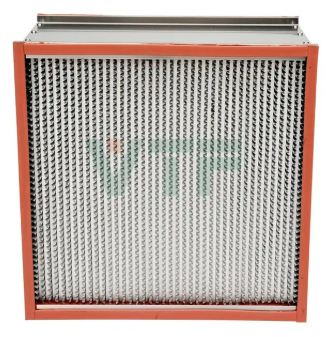
Proper installation and maintenance of HEPA filters are essential to ensure their continued effectiveness in maintaining clean air in laboratory environments. HEPA filters, like any other piece of equipment, must be installed correctly and regularly maintained to prevent air quality degradation.
To ensure maximum performance, HEPA filters should be installed following the manufacturer's guidelines and industry best practices. During installation, it is critical to ensure that there are no gaps between the filter and its housing. Even small leaks can reduce the effectiveness of the filter, allowing particles to bypass the filter and contaminate the cleanroom environment.
A proper seal can be achieved using gaskets, sealants, or other materials designed to provide a tight fit. Installation should also include careful consideration of airflow direction to ensure that air is filtered before entering the critical area of the laboratory.
Regular inspections are necessary to ensure the filter is still functioning at peak performance. Laboratory environments should implement periodic inspections to check for:
Pressure drops: A significant increase in pressure across the filter indicates that it is becoming clogged with particles and may need replacing.
Physical damage: HEPA filters can be damaged by physical impacts, excessive handling, or improper installation, which may cause them to lose their efficiency.
Seal integrity: The seals around the filter should be inspected regularly to ensure there are no leaks.
Monitoring the differential pressure across the HEPA filter is also a useful method for assessing filter performance. As particles accumulate, resistance to airflow increases, which can be tracked using pressure sensors. This data helps determine when the filter needs replacement.
HEPA filters do not last forever. Over time, their capacity to capture particles diminishes as they become loaded with dust and other contaminants. The replacement frequency depends on the level of contamination in the laboratory environment, as well as the airflow rates and the type of filter used.
Generally, a laboratory should replace its HEPA filters every 1–2 years, though more frequent replacements may be necessary in high-contamination environments or when the filter’s pressure drop reaches a specified threshold. During the replacement process, the system should be shut down to prevent contamination during the filter change, and the new filter should be thoroughly checked to ensure it is properly installed and sealed.
Laboratories, especially those involved in pharmaceutical, biological, and chemical testing, must comply with strict regulations regarding air quality and filtration. Compliance with these regulations ensures that laboratories operate safely and that their research and production processes are reliable.
Some of the key regulatory standards governing air filtration and cleanroom environments include:
ISO 14644 Cleanroom Standards: These standards define the particle count required for various cleanroom classes. Laboratories involved in sterile production or high-precision research often need to meet ISO Class 5 or Class 7 requirements.
GMP (Good Manufacturing Practices): For pharmaceutical and biotechnology labs, compliance with GMP ensures that the production of drugs and biologics follows rigorous standards for cleanliness, quality, and safety. HEPA filters play a critical role in meeting GMP requirements.
FDA and WHO Guidelines: These agencies provide guidelines for air quality in pharmaceutical production, research, and testing. HEPA filters are essential in maintaining air quality to meet the strict standards set by these organizations.
For many laboratories, especially those in regulated industries, HEPA filters must undergo periodic validation to ensure they are operating as expected. Filter validation typically involves:
Aerosol testing: This involves releasing a test aerosol (often a specific particle size) into the air and measuring the filter’s ability to capture these particles.
Leak testing: After installation, HEPA filters must be tested for leaks to ensure they provide a complete seal.
Particle counting: Monitoring the number of airborne particles in the laboratory environment ensures that HEPA filters are meeting required cleanliness standards.
HEPA filter performance must be documented and tracked in accordance with industry regulations to demonstrate compliance during inspections.
HEPA filters provide significant benefits that directly impact laboratory environments. These benefits go beyond just clean air; they contribute to overall research quality, safety, and regulatory compliance.
By removing airborne particles, HEPA filters reduce the exposure of laboratory personnel to harmful contaminants. In labs dealing with hazardous chemicals or biological agents, HEPA filtration helps to protect workers from inhaling dangerous substances, thus minimizing the risk of respiratory issues and allergic reactions.
HEPA filters are essential for ensuring that laboratory results are accurate and reproducible. By maintaining a contaminant-free environment, they prevent particles from interfering with experiments, protecting both the integrity of the results and the materials being used. In pharmaceutical labs, this means ensuring that drugs are free from contaminants, which is critical for product safety and efficacy.
Sensitive laboratory instruments, such as microscopes, spectrometers, and mass spectrometers, can be damaged by dust particles. HEPA filters help protect these instruments by preventing particles from accumulating on sensitive components, prolonging their lifespan and ensuring they function optimally.
A clean and safe environment fosters higher productivity. Lab workers can focus on their tasks without worrying about contamination, equipment malfunctions, or health risks. In addition, reducing contamination-related errors leads to fewer rework cycles, faster turnaround times, and a more efficient lab operation.
HEPA filters are undeniably vital in laboratory environments, where maintaining clean and controlled air is essential to ensure the accuracy of experiments, the safety of personnel, and the integrity of sensitive equipment and materials. From biological and pharmaceutical labs to chemical research and forensic environments, these filters provide the necessary protection against airborne contaminants that could otherwise compromise the results of critical research.
By ensuring a constant, high level of air quality, HEPA filters help meet stringent industry regulations, including ISO, GMP, and FDA standards, which are paramount in maintaining both safety and product quality. Whether in maintaining sterile conditions in a pharmaceutical production line or safeguarding research integrity in a laboratory, the effectiveness of HEPA filters cannot be overstated.
While the installation and ongoing maintenance of these filters require investment, the benefits they provide in terms of safety, productivity, and regulatory compliance make them an essential component of any laboratory's air quality management strategy. With ongoing advancements in HEPA filter technology, including energy-efficient designs and smart monitoring systems, the future of clean air in laboratories looks even more promising.
Ultimately, the role of HEPA filters in maintaining clean air is not just about ensuring that laboratories are contaminant-free; it is about protecting the people who work in these environments, the integrity of the research conducted, and the products developed. In an industry where precision, safety, and reliability are critical, HEPA filters stand as a vital pillar of modern laboratory operations.